Do I need to read the earlier books first?
Yes, reading the earlier volumes first helps: this is the sixth Vampire Chronicles novel, and it opens amid events and relationships established in earlier volumes.
 collected

Fiction · Novel · Gothic Fiction · Horror
About 9 h 30 min · at 30 minutes a day, about 20 days
Estimated from the page count of this edition. Dense books can take longer than the estimate.
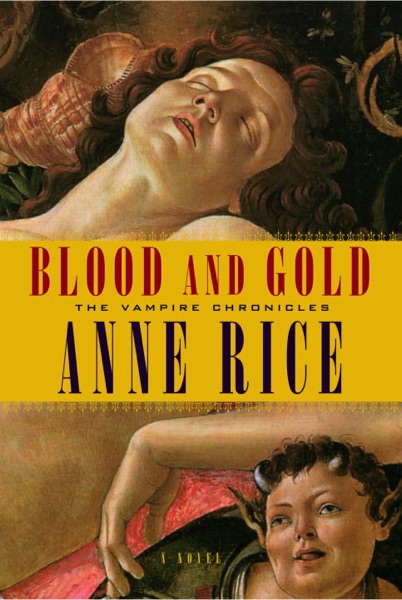
Still looking like a boy after five centuries, Armand recounts his life to fellow vampire David Talbot. His memories lead from a childhood steeped in religious art through capture and enslavement in Constantinople to Renaissance Venice, where Marius, a vampire living as a reclusive painter, becomes his teacher and lover. Through Marius, Armand discovers art, pleasure, and vampiric immortality, while struggling to reconcile desire with religious faith.
The narration is ornate, sensual, and confessional, dwelling on beauty and spiritual doubt. Explicit sex, sexual abuse, suicide, and strong violence feature in this adult Gothic horror novel. As the sixth Vampire Chronicles book, it opens amid events and relationships established in earlier volumes.
Collected’s assessment, not reader ratings. Complexity runs from 1 (least demanding) to 5 (most demanding).
Yes, reading the earlier volumes first helps: this is the sixth Vampire Chronicles novel, and it opens amid events and relationships established in earlier volumes.
The ornate, lyrical prose takes some attention, and the pace is measured. Armand’s first-person confession dwells on beauty and spiritual doubt, with more emphasis on atmosphere, character, and relationships than on action.
The content notes flag strong sexual content.
Strong violence, sexual abuse, and suicide feature in this adult Gothic horror novel, alongside explicit sex. Armand’s memories also include capture and enslavement, and the tone is dark, intimate, and unsettling.
Religious faith is central to Armand’s struggle to reconcile desire with belief. His memories begin with a childhood steeped in religious art, and his narration repeatedly dwells on beauty and spiritual doubt.
480 pages in the Ballantine Books 2000 mass market paperback edition.
Ballantine Books · 2000 · Mass Market Paperback. ISBN 9780345434807.
About 9 hours 30 minutes at 50 pages an hour, based on the 480-page Ballantine Books edition. Dense books can take longer.
Anne Rice wrote Gothic fiction on a deliberately expansive scale, moving between supernatural sagas, historical novels, erotic retellings, and biblical fiction. Her characteristic prose is ornate and atmospheric, attentive to rooms, bodies, clothing, and the charged exchanges through which power changes hands. She often lets her immortals narrate themselves at length, so that confession becomes self-invention and history remains open to competing versions. Interview with the Vampire gives Louis’s moral anguish the shape of a two-century testimony, while The Vampire Lestat answers him with a more defiant autobiography that ranges through theaters, covens, and family memories. Rice repeatedly returns to appetite, guilt, spiritual belief, and relationships in which dependence cannot be separated from domination. These concerns also govern The Witching Hour, where a neurosurgeon’s return to New Orleans opens into a centuries-long family history bound to a seductive and destructive spirit. Even outside her vampire fiction, as in The Claiming of Sleeping Beauty, she makes ritual, submission, and unequal desire central to the narrative structure.