Is it hard to read?
Not really. Direct prose and a linear storyline make the mystery easy to follow, though the explanations of art and religious symbolism demand more attention than the chase scenes.
 collected

Fiction · Novel · Mystery & Thriller · Adventure
About 9 h 15 min · at 30 minutes a day, about 19 days
Estimated from the page count of this edition. Dense books can take longer than the estimate.
In contemporary Paris, a murdered Louvre curator leaves coded messages that bring Harvard symbologist Robert Langdon together with French cryptologist Sophie Neveu. Clues in Leonardo da Vinci’s paintings point toward the Priory of Sion, a secret society the curator belonged to. Pursued as they investigate, the pair must decipher his instructions before the knowledge he died protecting is lost.
Short chapters and frequent cliffhangers keep this adult conspiracy thriller moving, though the chase repeatedly pauses for lengthy explanations of art and religious symbolism. The pleasure lies in following the puzzles; the explanatory dialogue can feel like a lecture. Bloody violence and religiously motivated self-harm are recurring elements.
Collected’s assessment, not reader ratings. Complexity runs from 1 (least demanding) to 5 (most demanding).
Not really. Direct prose and a linear storyline make the mystery easy to follow, though the explanations of art and religious symbolism demand more attention than the chase scenes.
Short chapters and frequent cliffhangers keep the chase moving, but lengthy explanations of art and religious symbolism repeatedly interrupt it. The explanatory dialogue can feel like a lecture.
Strong bloody violence and religiously motivated self-harm are recurring elements. They sit alongside the coded messages and pursuit, making the adult conspiracy thriller more intense than its art puzzles alone might suggest.
The main appeal is following coded messages and puzzles involving Leonardo da Vinci’s paintings, a secret society, and religious symbolism. It suits someone who enjoys an idea-driven mystery and has patience for lengthy explanations between moments of suspense.
464 pages in the Doubleday 2003 hardcover edition.
Doubleday · 2003 · Hardcover. ISBN 9780385504201.
1. Angels & Demons; 2. The Da Vinci Code; 2. The Da Vinci Code; 3. The Lost Symbol; 4. Inferno; 5. Origin; 6. The Secret of Secrets.
About 9 hours 15 minutes at 50 pages an hour, based on the 464-page Doubleday edition. Dense books can take longer.
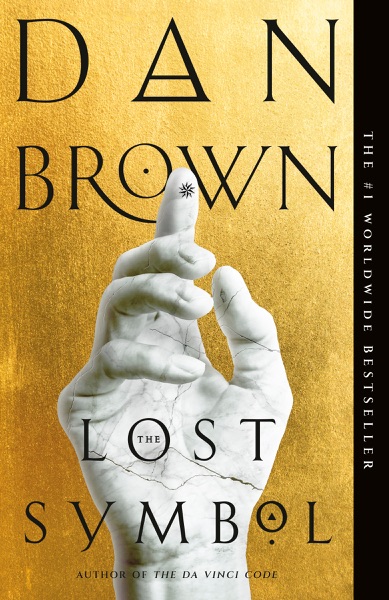
Dan Brown writes plot-driven thrillers built as compressed treasure hunts, often unfolding within a day as characters decode symbols under immediate threat. His method is architectural. Direct, dialogue-driven prose, rapid changes of location, and successive revelations keep the investigation moving, while explanatory passages turn art, religion, science, and institutional history into clues. Cryptography and conspiracy recur, as does Robert Langdon, a symbologist whose expertise makes museums, monuments, and sacred spaces legible as puzzle systems. The Da Vinci Code sends Langdon and cryptologist Sophie Neveu through clues concealed in Leonardo’s art toward an alternative Christian history. In The Lost Symbol, Washington’s chambers and monuments serve a similar function for a Masonic mystery, with symbolic interpretation repeatedly interrupted by pursuit and violence. Brown also applies this machinery outside the Langdon novels. Deception Point begins with the authentication of an apparent extraterrestrial discovery and rapidly entangles scientific evidence with electoral politics, covert force, and family allegiance. His novels favor momentum and accumulation, linking each solved cipher to a larger and more dangerous claim.