Do I need to read the earlier books first?
No, Angels & Demons is the first Robert Langdon novel. It starts the series with Langdon and scientist Vittoria Vetra investigating a murder and a threat to Vatican City.
 collected

Fiction · Novel · Mystery & Thriller · Adventure
About 10 h · at 30 minutes a day, about 20 days
Estimated from the page count of this edition. Dense books can take longer than the estimate.
Harvard professor Robert Langdon and scientist Vittoria Vetra investigate a symbol branded on her murdered father’s chest at CERN, pointing to the Illuminati and their hostility toward the Catholic Church. In contemporary Rome, cardinals are gathering to elect a pope when a bomb threat puts Vatican City in danger. Langdon and Vittoria search churches and crypts along an ancient trail of symbols, racing to locate the weapon before it detonates.
The first Robert Langdon novel is an adult conspiracy thriller built around puzzles, short chapters, and frequent cliffhangers. The pace is urgent, though explanations of art, religious history, and science repeatedly pause the chase. Graphic violence, abuse, and suicide are significant subjects.
Collected’s assessment, not reader ratings. Complexity runs from 1 (least demanding) to 5 (most demanding).
No, Angels & Demons is the first Robert Langdon novel. It starts the series with Langdon and scientist Vittoria Vetra investigating a murder and a threat to Vatican City.
Not really, the prose is direct and dialogue driven, and the plot follows a linear structure. Explanations of art, religious history, and science add complexity without requiring prior knowledge.
Short chapters and frequent cliffhangers give the search through Rome’s churches and crypts an urgent pace. Explanations of art, religious history, and science repeatedly pause the action, so the chase alternates with explanatory passages.
Strong, graphic violence includes a murder involving a symbol branded on the victim’s chest. Abuse and suicide are also significant subjects in an adult conspiracy thriller with a tense, suspenseful tone.
About 496 pages in the Washington Square Press 2006 edition. Short chapters and frequent cliffhangers keep the pace urgent, though explanatory passages repeatedly interrupt the chase.
Washington Square Press · 2006 · Paperback. ISBN 9780743493468.
About 10 hours at 50 pages an hour, based on the 496-page Washington Square Press edition. Dense books can take longer.
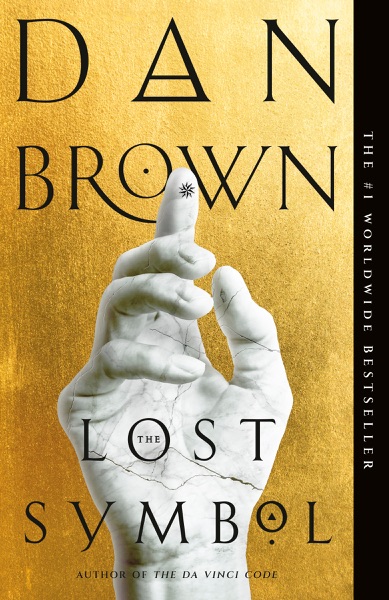
Dan Brown writes plot-driven thrillers built as compressed treasure hunts, often unfolding within a day as characters decode symbols under immediate threat. His method is architectural. Direct, dialogue-driven prose, rapid changes of location, and successive revelations keep the investigation moving, while explanatory passages turn art, religion, science, and institutional history into clues. Cryptography and conspiracy recur, as does Robert Langdon, a symbologist whose expertise makes museums, monuments, and sacred spaces legible as puzzle systems. The Da Vinci Code sends Langdon and cryptologist Sophie Neveu through clues concealed in Leonardo’s art toward an alternative Christian history. In The Lost Symbol, Washington’s chambers and monuments serve a similar function for a Masonic mystery, with symbolic interpretation repeatedly interrupted by pursuit and violence. Brown also applies this machinery outside the Langdon novels. Deception Point begins with the authentication of an apparent extraterrestrial discovery and rapidly entangles scientific evidence with electoral politics, covert force, and family allegiance. His novels favor momentum and accumulation, linking each solved cipher to a larger and more dangerous claim.