About 12 h 15 min · at 30 minutes a day, about 25 days
Estimated from the page count of this edition. Dense books can take longer than the estimate.
About the book
Robert Langdon arrives at Bilbao’s Guggenheim Museum to hear his former student Edmond Kirsch explain a discovery about humanity’s origins and future that could challenge organized religion. When the presentation erupts into chaos, Langdon flees with museum director Ambra Vidal. Their search for the password protecting Kirsch’s research takes them to Barcelona, pursued by forces determined to keep the discovery from reaching the public.
Reader notes
The fifth Langdon thriller combines a violent pursuit through contemporary Spain with extended explanations of modern art, architecture, and science. The danger is urgent, but the chase repeatedly pauses for sightseeing and debate about faith and technology; those digressions occupy a substantial part of the novel.
How it reads
Writing style
Descriptive · Dialogue-driven · Direct
Tone
Cerebral · Suspenseful · Tense
Structure
Linear
Driven by
Ideas · Mystery · Plot
Point of view
Multiple viewpoints
Setting
Bilbao · Barcelona
Reading complexity
Writing
2 / 5
Ideas
3 / 5
Structure
3 / 5
Background knowledge
1 / 5
About this profile
Collected’s assessment, not reader ratings. Complexity runs from 1 (least demanding) to 5 (most demanding).
Writing
How much attention the sentences and language require.
Ideas
How much interpretation or abstract reasoning the book asks of you.
Structure
How much you need to keep track of speakers, timelines and connections.
Background knowledge
Prior knowledge needed to follow the book, beyond what it explains.
Emotional intensity
Emotional pressure, from gentle (1) to intense (5). Separate from difficulty.
Not really, the prose is direct and dialogue driven, and the main search follows a linear course. The greater demand comes from extended explanations of science, modern art, and architecture, alongside debates about faith and technology.
Does the chase keep moving?
The danger is urgent and the pursuit fast, but the chase repeatedly pauses for sightseeing and debate. Art, architecture, science, faith, and technology occupy a substantial part of the novel, so the suspense shares space with extended explanations.
What kind of mystery is it?
Langdon and museum director Ambra Vidal search for the password protecting a discovery about humanity’s origins and future. Their pursuit takes them from Bilbao to Barcelona, with forces trying to prevent research that could challenge organized religion from reaching the public.
How strong is the violence?
Strong violence accompanies the pursuit through contemporary Spain. The tense chase is the main content concern; sexual content, strong language, substance use, and references to self-harm or suicide are mild.
How long is it?
About 608 pages in the Anchor Books 2018 edition. Extended explanations of art, architecture, and science, plus sightseeing and debate, occupy a substantial share of that length.
Which edition is shown here?
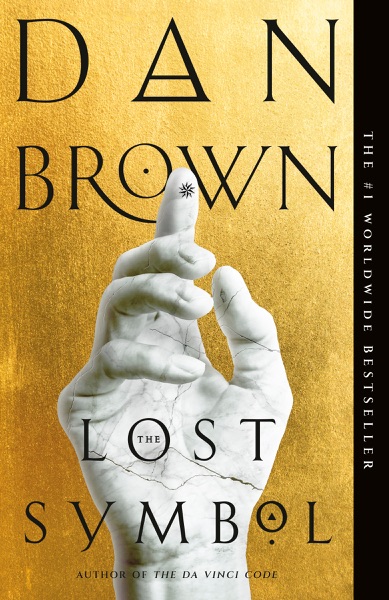
Anchor Books · 2018 · Paperback. ISBN 9780525563693.
What is the order of books in Robert Langdon?
1. Angels & Demons; 2. The Da Vinci Code; 2. The Da Vinci Code; 3. The Lost Symbol; 4. Inferno; 5. Origin; 6. The Secret of Secrets.
How long does it take to read Origin?
About 12 hours 15 minutes at 50 pages an hour, based on the 608-page Anchor Books edition. Dense books can take longer.
About the author
Dan Brown
Dan Brown writes plot-driven thrillers built as compressed treasure hunts, often unfolding within a day as characters decode symbols under immediate threat. His method is architectural. Direct, dialogue-driven prose, rapid changes of location, and successive revelations keep the investigation moving, while explanatory passages turn art, religion, science, and institutional history into clues. Cryptography and conspiracy recur, as does Robert Langdon, a symbologist whose expertise makes museums, monuments, and sacred spaces legible as puzzle systems. The Da Vinci Code sends Langdon and cryptologist Sophie Neveu through clues concealed in Leonardo’s art toward an alternative Christian history. In The Lost Symbol, Washington’s chambers and monuments serve a similar function for a Masonic mystery, with symbolic interpretation repeatedly interrupted by pursuit and violence. Brown also applies this machinery outside the Langdon novels. Deception Point begins with the authentication of an apparent extraterrestrial discovery and rapidly entangles scientific evidence with electoral politics, covert force, and family allegiance. His novels favor momentum and accumulation, linking each solved cipher to a larger and more dangerous claim.