Is it hard to read?
Not really, at the sentence level: the prose is spare and direct, and the narrative follows a linear sequence. The harder work is interpreting Meursault’s actions and sensations when he offers little explanation of his motives.
 collected
About 3 h · at 30 minutes a day, about 6 days
Estimated from the page count of this edition. Dense books can take longer than the estimate.
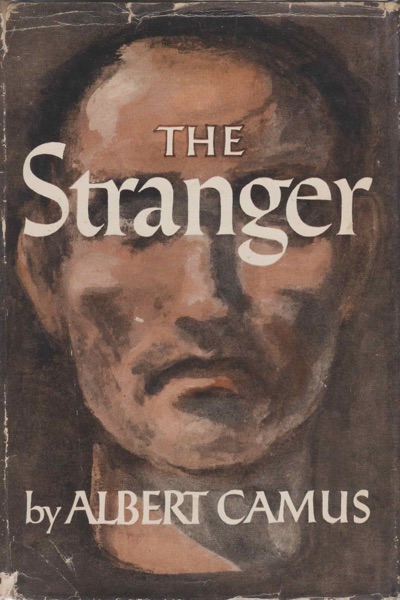
Meursault, a clerk in French-ruled Algiers, begins a relationship with Marie Cardona soon after his mother’s funeral, but feels no need to express the love or grief others expect. Between work, swimming, and involvement in his neighbor Raymond’s affairs, he accepts much of what happens without questioning it. A killing on a beach brings consequences far beyond these everyday encounters.
The spare first-person narration is emotionally distant but acutely attentive to heat, sunlight, and physical pleasure. This short philosophical novel is direct at the sentence level; the harder work is interpreting a narrator who reports his actions and sensations while offering little explanation of his motives.
Collected’s assessment, not reader ratings. Complexity runs from 1 (least demanding) to 5 (most demanding).
Canonical
Not really, at the sentence level: the prose is spare and direct, and the narrative follows a linear sequence. The harder work is interpreting Meursault’s actions and sensations when he offers little explanation of his motives.
Yes, Meursault reports events without expressing the love or grief others expect, even after his mother’s funeral. His attention to heat, sunlight, and physical pleasure gives the detached narration a concrete sensory focus, alongside its bleak and unsettling tone.
No, prior philosophical knowledge is not needed. The ideas emerge through Meursault’s everyday encounters, a killing, and its consequences, with questions about morality, justice, isolation, and mortality carried by his spare first-person account.
A killing on a beach is central to the story, though the violence is mild in presentation. Abuse and self-harm or suicide also appear at a mild level; the bleak, detached treatment of death and morality contributes to the unsettling tone.
144 pages in the Vintage International 1989 paperback edition.
Vintage International · 1989 · Paperback. ISBN 9780679720201.
About 3 hours at 50 pages an hour, based on the 144-page Vintage International edition. Dense books can take longer.
Albert Camus was a French Algerian novelist, essayist, dramatist, journalist, and philosopher whose fiction and arguments repeatedly test how people live without reliable moral or metaphysical guarantees. His prose tends toward clarity and compression, though he changes form sharply: spare first-person narration, civic chronicle, philosophical essay, and sustained dramatic monologue. In The Stranger, Meursault’s flat account of death, murder, and trial leaves social judgment to gather around what he refuses to explain or perform. The Plague broadens the scale, moving among inhabitants of Oran as epidemic turns private choices into a record of collective suffering and practical responsibility. Camus’s essays state the underlying problem directly. The Myth of Sisyphus begins with the human demand for meaning and an unanswering universe, then argues for lucid persistence rather than escape. The Fall subjects such moral confidence to a darker method: a Parisian lawyer’s witty, circling confession becomes an accusation, with the silent listener gradually drawn into his habits of vanity and judgment.