Is it hard to read?
Somewhat. Ginny’s first-person account follows a linear story, but the measured pace, farm routines and strained domestic conversations require patience. The difficulty lies partly in the emotional weight of the family’s history.
 collected
Fiction · Novel · Literary Fiction · Literary fiction
About 7 h 45 min · at 30 minutes a day, about 16 days
Estimated from the page count of this edition. Dense books can take longer than the estimate.
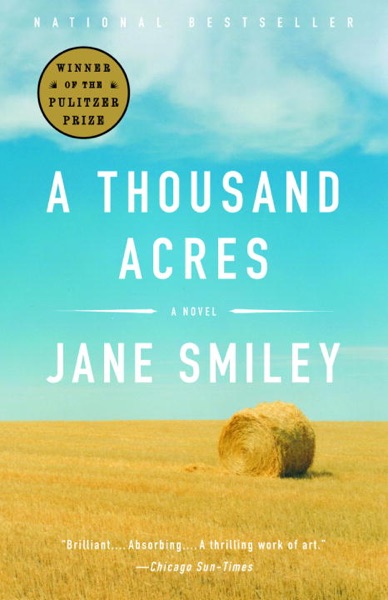
Larry Cook plans to hand his prosperous Iowa farm to his three grown daughters, but excludes Caroline when she questions the arrangement. Her older sisters, Ginny and Rose, accept, seeing an opportunity to make decisions after years under their father’s authority. Ginny has organized her life around caring for Larry and farming alongside her husband, Ty, yet owning the land proves different from being allowed to run it.
Told by Ginny, this measured literary family drama reworks Shakespeare’s play King Lear from a daughter’s perspective. Farm routines and strained domestic conversations require some patience; childhood sexual abuse and its lasting damage are serious concerns throughout the novel.
Collected’s assessment, not reader ratings. Complexity runs from 1 (least demanding) to 5 (most demanding).
Canonical
Somewhat. Ginny’s first-person account follows a linear story, but the measured pace, farm routines and strained domestic conversations require patience. The difficulty lies partly in the emotional weight of the family’s history.
Strong abuse and sexual content center on childhood sexual abuse and its lasting damage, which remain serious concerns throughout the novel. Strong language and substance use also feature.
A dark, intimate and tense family tragedy, with a melancholic tone. Ginny’s perspective keeps the focus on relationships, while farm routines and domestic conversations give the drama a measured pace.
Ownership and authority: Ginny and Rose accept their father’s farm hoping to make decisions for themselves, but owning the land proves different from being allowed to run it. Family, marriage, power and trauma are central themes.
384 pages in the Vintage 2003 paperback edition.
Vintage · 2003 · Paperback. ISBN 9781400033836.
About 7 hours 45 minutes at 50 pages an hour, based on the 384-page Vintage edition. Dense books can take longer.
Jane Smiley is an American novelist whose fiction ranges from family tragedy and intimate studies of marriage to broad institutional satire. Across these forms, she examines apparently stable social worlds under pressure, tracing how inheritance, ambition, money, desire, and private grievance reshape relationships. She adjusts her narrative method to the scale of the subject: A Thousand Acres uses Ginny’s first-person perspective to recast King Lear on an Iowa farm, while Moo distributes attention across more than a dozen plots to portray a Midwestern university as a network of competing interests. The Age of Grief narrows the focus, allowing marital uncertainty to gather through ordinary domestic routines. Her nonfiction extends this attention to the novel itself. Thirteen Ways of Looking at the Novel considers its history and nature across a span from The Tale of Genji to contemporary American women’s writing.