Is it hard to read?
Somewhat. The geological vocabulary can be demanding, and explanations of plate tectonics and geological time require attention. Vivid descriptions and field conversations alternate with the scientific explanation.
 collected
Nonfiction · Science · Nature & Environment · Travel
About 4 h 45 min · at 30 minutes a day, about 10 days
Estimated from the page count of this edition. Dense books can take longer than the estimate.
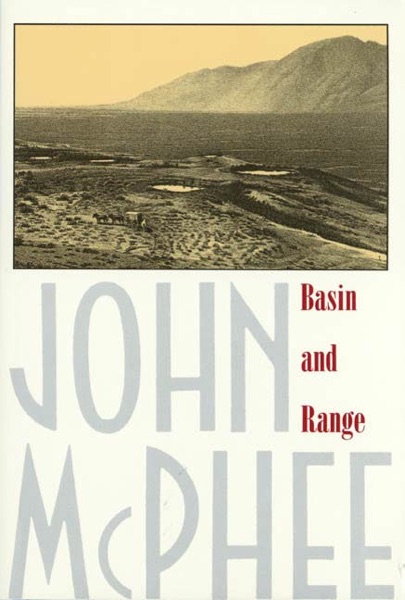
At roadcuts along Interstate 80, John McPhee watches geologists read exposed rock for evidence of vanished landscapes. Traveling from New Jersey into the American West, including Nevada with geologist Kenneth Deffeyes, he connects the terrain visible from the highway to the continents, seas and mountains that preceded it. Basin and Range explains plate tectonics and the development of the geological time scale, asking how people learned to reconstruct a past so far beyond human experience.
Field conversations and closely observed landscapes alternate with scientific explanation in the opening volume of Annals of the Former World. The writing is vivid and often lyrical, but the geological vocabulary can be demanding, and the journey regularly pauses for the history of an idea.
Collected’s assessment, not reader ratings. Complexity runs from 1 (least demanding) to 5 (most demanding).
Established
Somewhat. The geological vocabulary can be demanding, and explanations of plate tectonics and geological time require attention. Vivid descriptions and field conversations alternate with the scientific explanation.
Scientific explanation is central, with travel along Interstate 80 connecting exposed rock to vanished landscapes. Field conversations and landscape descriptions alternate with explanations and the history of geological ideas, keeping the pace measured.
It suits someone curious about how geologists reconstruct vanished landscapes and make sense of deep time. The emphasis is reflective and explanatory, combining observed landscapes, scientific ideas and conversations about geological work.
No. Basin and Range is the opening volume of Annals of the Former World, so there are no earlier volumes in the series to read first.
240 pages in the Farrar, Straus and Giroux 1982 trade paperback edition.
Farrar, Straus and Giroux · 1982 · Trade Paperback. ISBN 9780374516901.
About 4 hours 45 minutes at 50 pages an hour, based on the 240-page Farrar, Straus and Giroux edition. Dense books can take longer.
John McPhee is an American writer and a pioneer of creative nonfiction whose career has joined patient reporting to literary construction. After beginning at Time, he formed a long association with The New Yorker, where much of the material in his books first appeared, and began teaching nonfiction writing at Princeton University in 1975. His subjects range unusually widely: geology, engineering, conservation, commerce, transportation, regional life, and specialized scientific work. What holds this varied body of work together is his method. McPhee spends time with people who possess deep practical knowledge, renders character and place precisely, and builds complex explanations through scenes and journeys. Annals of the Former World turns travel with geologists along Interstate 80 into a continental history, while The Control of Nature examines efforts to contain powerful natural systems. In Encounters with the Archdruid and Coming into the Country, competing ideas about wilderness, development, and settlement emerge through observed encounters rather than authorial display. His prose makes difficult or obscure subjects approachable without simplifying their substance.