About 3 h 30 min · at 30 minutes a day, about 8 days
Estimated from the page count of this edition. Dense books can take longer than the estimate.
About the book
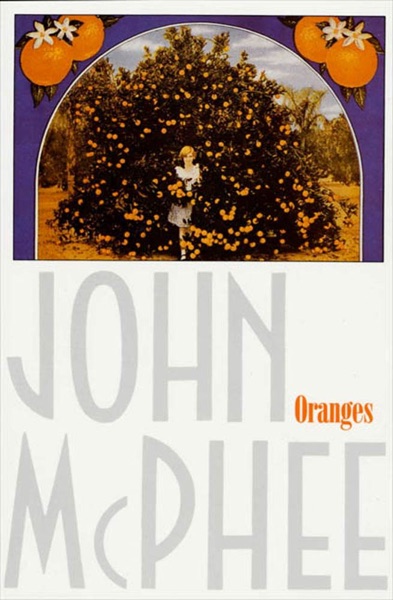
Behind a can of frozen orange juice lies an industry of growers, botanists, pickers and processors. John McPhee visits Florida's citrus business in the 1960s to explain how oranges grow, why their color can mislead a shopper, and how concentrate production transformed the market. He traces the fruit's travels and Florida's cultivation history, introducing people such as independent citrus magnate Ben Hill Griffin of Frostproof.
Reader notes
The reporting is digressive and dryly funny, pausing over botanical puzzles, technical processes and the people explaining them. It reads as a roaming inquiry into an ordinary fruit, so the small discoveries and encounters matter more than a continuous story.
How it reads
Writing style
Descriptive · Essayistic · Journalistic
Tone
Cerebral · Reflective
Structure
Episodic
Driven by
Information
Point of view
First person
Setting
Florida
Evidence style
Journalistic reporting · Research synthesis
Practical orientation
Reflective
Nonfiction form
Explanation synthesis · History
Reading complexity
Writing
3 / 5
Ideas
3 / 5
Structure
2 / 5
Background knowledge
1 / 5
About this profile
Collected’s assessment, not reader ratings. Complexity runs from 1 (least demanding) to 5 (most demanding).
Writing
How much attention the sentences and language require.
Ideas
How much interpretation or abstract reasoning the book asks of you.
Structure
How much you need to keep track of speakers, timelines and connections.
Background knowledge
Prior knowledge needed to follow the book, beyond what it explains.
Emotional intensity
Emotional pressure, from gentle (1) to intense (5). Separate from difficulty.
Themes
Nature and environment
Technology and society
Work
Content notes
Violence
None
Sexual content
None
Swearing
None
Substance use
None
Abuse
None
Self-harm or suicide
None
Questions readers ask
Do I need to know anything about botany or the citrus industry?
No, McPhee explains how oranges grow and how the citrus business works through reporting and encounters with growers, botanists, pickers and processors. The botanical puzzles and technical processes require some attention, but no prior knowledge is needed.
Does it follow a continuous story?
Not really, the reporting moves between botanical puzzles, Florida’s cultivation history, concentrate production and the people working in citrus. The pace is measured and the humor dry; small discoveries and encounters matter more than a continuous narrative.
Is it useful as a practical guide to oranges?
Not really, the emphasis is on understanding the fruit and its industry rather than practical instruction. McPhee explains why orange color can mislead a shopper, but his inquiry ranges through cultivation history, botanical questions and the market changes brought by concentrate production.
Who is it best suited to?
It suits someone curious about how an ordinary food connects nature, technology and work. The focus extends from how oranges grow to the growers, pickers and processors behind frozen juice, with descriptive reporting on Florida’s citrus business in the 1960s.
How long is it?
About 176 pages in the Farrar, Straus and Giroux 2000 edition. Its episodic structure moves between people, history and technical explanations at a measured pace.
Which edition is shown here?
Farrar, Straus and Giroux · 1975 · Trade Paperback. ISBN 9780374512972.
How long does it take to read Oranges?
About 3 hours 30 minutes at 50 pages an hour, based on the 176-page Farrar, Straus and Giroux edition. Dense books can take longer.
About the author
John McPhee
John McPhee is an American writer and a pioneer of creative nonfiction whose career has joined patient reporting to literary construction. After beginning at Time, he formed a long association with The New Yorker, where much of the material in his books first appeared, and began teaching nonfiction writing at Princeton University in 1975. His subjects range unusually widely: geology, engineering, conservation, commerce, transportation, regional life, and specialized scientific work. What holds this varied body of work together is his method. McPhee spends time with people who possess deep practical knowledge, renders character and place precisely, and builds complex explanations through scenes and journeys. Annals of the Former World turns travel with geologists along Interstate 80 into a continental history, while The Control of Nature examines efforts to contain powerful natural systems. In Encounters with the Archdruid and Coming into the Country, competing ideas about wilderness, development, and settlement emerge through observed encounters rather than authorial display. His prose makes difficult or obscure subjects approachable without simplifying their substance.