Is it hard to read?
Not really. The conversational, journalistic prose and three-encounter structure make the arguments approachable, though the measured pace and questions about preservation and human need call for reflection.
 collected
Nonfiction · Nature & Environment · Politics & Government · Science and nature
About 5 h · at 30 minutes a day, about 11 days
Estimated from the page count of this edition. Dense books can take longer than the estimate.
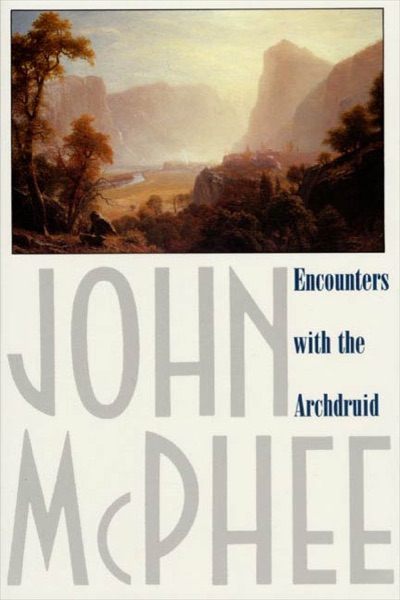
John McPhee accompanies conservationist David Brower into landscapes whose future divides him from three advocates of development. In Washington’s Glacier Peak Wilderness, mineral engineer Charles Park argues for extracting copper; on Georgia’s Cumberland Island, developer Charles Fraser defends coastal building. A Colorado River trip through the Grand Canyon brings Brower together with federal dam builder Floyd Dominy, their disagreement sharpened by the flooding of Glen Canyon.
Conversational and closely observed, the book unfolds as three encounters, allowing arguments about preservation and human need to emerge from travel, landscape and personality. The men can enjoy one another’s company while rejecting one another’s convictions, and McPhee leaves their disagreements open for judgment.
Collected’s assessment, not reader ratings. Complexity runs from 1 (least demanding) to 5 (most demanding).
Highly regarded
Not really. The conversational, journalistic prose and three-encounter structure make the arguments approachable, though the measured pace and questions about preservation and human need call for reflection.
No. McPhee follows David Brower into disagreements over copper extraction, coastal development and dams. The emphasis is on weighing competing convictions through travel, landscape and personality rather than giving practical instructions.
No. McPhee leaves the disagreements open for judgment, showing how Brower and the development advocates can enjoy one another’s company while rejecting one another’s convictions.
Nature and politics are closely joined: wilderness, an island and a river become places to debate preservation, development and human need. Landscape descriptions sit alongside arguments shaped by the men’s personalities.
256 pages in the Farrar, Straus and Giroux 1977 paperback edition.
Farrar, Straus and Giroux · 1977 · Paperback. ISBN 9780374514310.
About 5 hours at 50 pages an hour, based on the 256-page Farrar, Straus and Giroux edition. Dense books can take longer.
John McPhee is an American writer and a pioneer of creative nonfiction whose career has joined patient reporting to literary construction. After beginning at Time, he formed a long association with The New Yorker, where much of the material in his books first appeared, and began teaching nonfiction writing at Princeton University in 1975. His subjects range unusually widely: geology, engineering, conservation, commerce, transportation, regional life, and specialized scientific work. What holds this varied body of work together is his method. McPhee spends time with people who possess deep practical knowledge, renders character and place precisely, and builds complex explanations through scenes and journeys. Annals of the Former World turns travel with geologists along Interstate 80 into a continental history, while The Control of Nature examines efforts to contain powerful natural systems. In Encounters with the Archdruid and Coming into the Country, competing ideas about wilderness, development, and settlement emerge through observed encounters rather than authorial display. His prose makes difficult or obscure subjects approachable without simplifying their substance.


Wendell Berry
Nature & Environment · Science and nature · Environmental writing


Robin Wall Kimmerer
Nature & Environment · Science and nature · Environmental writing

Bill Bryson
Nature & Environment · Science and nature · Nature and environment


Timothy Egan
Nature & Environment · Environmental writing · Nature and environment