Do I need to read the earlier book first?
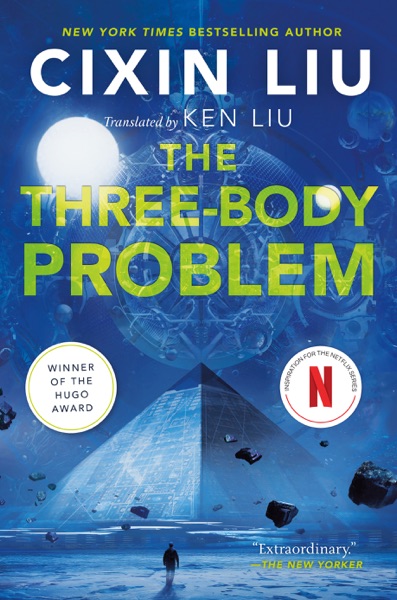
Yes, start with The Three-Body Problem. This second entry in Remembrance of Earth's Past continues the crisis established there, developing humanity's preparations for the Trisolaran invasion.
 collected

Fiction · Novel · Science Fiction · Science fiction
About 10 h 30 min · at 30 minutes a day, about 22 days
Estimated from the page count of this edition. Dense books can take longer than the estimate.
Earth has four centuries to prepare for an invasion from Trisolaris, whose sophons monitor humanity's preparations and block advances in fundamental physics. Human thought remains private, so the United Nations appoints four Wallfacers to devise defense strategies they must conceal even from their allies. Three are prominent public figures; the fourth, Chinese astronomer and sociologist Luo Ji, does not know why he was chosen or why the aliens want him dead.
Extended scientific arguments, strategic deception and competing plans occupy much of this hard science fiction sequel. The narrative follows several planners and their opponents, requiring sustained attention to ideas and explanations. It continues the crisis established in The Three-Body Problem, the first novel in the series.
Collected’s assessment, not reader ratings. Complexity runs from 1 (least demanding) to 5 (most demanding).
Yes, start with The Three-Body Problem. This second entry in Remembrance of Earth's Past continues the crisis established there, developing humanity's preparations for the Trisolaran invasion.
Yes, extended scientific arguments and competing defense strategies require sustained attention. The prose is direct but technical, and the narrative follows several planners and their opponents rather than staying with one viewpoint.
The pace varies, with extended explanations and strategic planning occupying much of the narrative. Its tension comes from concealed intentions and competing plans under alien surveillance.
Strong violence is the main content concern. Self-harm and suicide are also present at a mild level, along with mild sexual content.
It suits readers drawn to technical, idea-focused science fiction, especially questions of survival, knowledge and power. Scientific explanations and strategic deception occupy much of the narrative, with a bleak, cerebral tone.
528 pages in the Tor Books 2016 paperback edition.
Tor Books · 2016 · paperback. ISBN 9780765386694.
About 10 hours 30 minutes at 50 pages an hour, based on the 528-page Tor Books edition. Dense books can take longer.
Liu Cixin is a Chinese computer engineer and science fiction writer. He worked at a power plant in Shanxi and completed his first two novels, China 2185 and Supernova-Era, while employed as an engineer. His fiction combines direct, descriptive, often technical prose with speculative ideas that expand from individual decisions into questions of social order and civilizational survival. Across China 2185 and the Three-Body trilogy, he addresses posthumanism and political criticism while returning to secrecy, deterrence, technological limits, and the difficulty of cooperation. The Three-Body Problem roots humanity’s encounter with an alien civilization in the Cultural Revolution; the later novels carry that conflict across centuries, examining strategy, compassion, and humanity’s place in an indifferent universe.