About 3 h 30 min · at 30 minutes a day, about 8 days
Estimated from the page count of this edition. Dense books can take longer than the estimate.
About the book
James Figueras, an art critic working in Palm Beach, wants a reputation powerful enough to make an artist’s career. A collector offers him access to Jacques Debierue, a celebrated painter living in seclusion in Florida, on condition that he steal one of Debierue’s works. Accompanied by his girlfriend, Berenice Hollis, Figueras sets out to secure the interview he believes will make him indispensable to the art world.
Reader notes
Figueras narrates with dry humor and complete confidence in his own judgment. His theories of modern art occupy considerable room alongside the criminal scheme, so the noir also reads as an extended satire of artistic authority. Violence and abuse are serious parts of the story.
How it reads
Writing style
Direct · Spare · Witty
Tone
Dark · Satirical · Tense
Structure
Linear
Driven by
Character · Ideas
Point of view
First person
Setting
Florida · Palm Beach
Reading complexity
Writing
2 / 5
Ideas
3 / 5
Structure
2 / 5
Background knowledge
1 / 5
About this profile
Collected’s assessment, not reader ratings. Complexity runs from 1 (least demanding) to 5 (most demanding).
Writing
How much attention the sentences and language require.
Ideas
How much interpretation or abstract reasoning the book asks of you.
Structure
How much you need to keep track of speakers, timelines and connections.
Background knowledge
Prior knowledge needed to follow the book, beyond what it explains.
Emotional intensity
Emotional pressure, from gentle (1) to intense (5). Separate from difficulty.
Themes
Ambition
Art and creativity
Crime and punishment
Morality
Content notes
Violence
Strong
Sexual content
Mild
Swearing
None
Substance use
None
Abuse
Strong
Self-harm or suicide
None
Questions readers ask
Is it hard to read?
Not really, the prose is direct, spare and witty, and the story follows a linear first-person account. Figueras’s theories of modern art take up considerable space, so the ideas demand more attention than the language or structure.
Is it a fast-paced thriller?
No, the pace is slow, with considerable space devoted to Figueras’s art theories alongside the criminal scheme. The tension shares room with dry humor and an extended satire of artistic authority.
What kind of narrator does it have?
James Figueras tells the story with dry humor and complete confidence in his own judgment. His ambition to become an influential art critic puts questions of reputation, artistic authority and morality at the center of his account.
How strong is the violence?
Strong violence and abuse are serious parts of the story. The dark, tense noir pairs these elements with satire and dry humor, so the wit does not mean the material is mild.
How long is it?
About 144 pages in the Vintage Books 1990 edition. The slow pace and considerable space given to art theory make it more deliberate than its length might suggest.
Which edition is shown here?
The Overlook Press · 2020 · Paperback. ISBN 9781419740459.
How long does it take to read The Burnt Orange Heresy?
About 3 hours 30 minutes at 50 pages an hour, based on the 176-page The Overlook Press edition. Dense books can take longer.
About the author
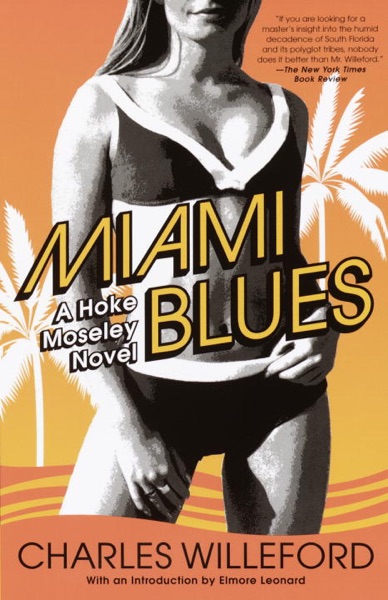
Charles Willeford
Charles Ray Willeford wrote poetry and literary criticism as well as crime fiction. His novels use direct, spare prose and sharp dialogue to follow characters whose practical schemes expose stranger forms of self-deception. Crime often unfolds beside ordinary pressures such as money, housing, work, and sexual dependence. Miami Blues and New Hope for the Dead mix police procedure with dark comedy, setting fantasies of reinvention against the untidy routines of Miami life. The Burnt Orange Heresy turns a theft plot into a satire of artistic prestige, manipulation, and ownership. In Pick-Up, the pace slows around two impoverished outcasts, with atmosphere and conversation carrying a story narrowed by addiction, violence, and economic hardship.