
Is it hard to read?
Not really. The prose is direct and dialogue driven, though braided storylines and multiple timelines require some attention as the narrative moves among family negotiations, criminal rivalries, and Hollywood.
 collected
Fiction · Novel · Mystery & Thriller · Historical Fiction
About 9 h · at 30 minutes a day, about 18 days
Estimated from the page count of this edition. Dense books can take longer than the estimate.
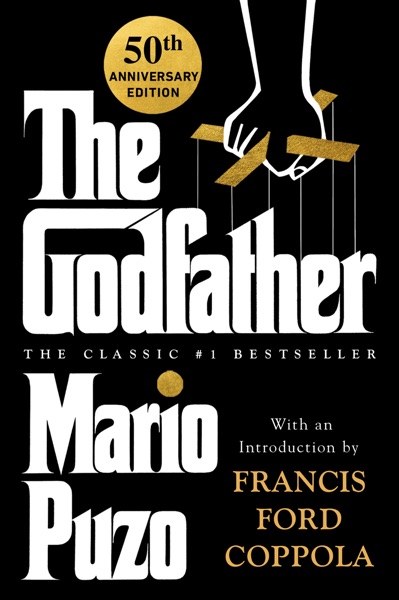
In postwar New York, Don Vito Corleone runs a Mafia family whose protection comes with debts that courts and contracts cannot enforce. At his daughter’s Long Island wedding, guests privately petition him for favors, including his godson Johnny Fontane, a singer seeking a Hollywood role. Vito’s youngest son, Michael, has returned from military service determined to keep his own life separate from the family business, where kinship and criminal obligation are inseparable.
Family negotiations, rivalries, and sudden brutality drive this sprawling crime saga, with excursions into Hollywood and characters’ sex lives. Graphic violence, explicit sex, and domestic abuse accompany a telling that often admires the Don’s authority; women remain largely defined by their relationships with men.
Collected’s assessment, not reader ratings. Complexity runs from 1 (least demanding) to 5 (most demanding).
Highly regarded
Not really. The prose is direct and dialogue driven, though braided storylines and multiple timelines require some attention as the narrative moves among family negotiations, criminal rivalries, and Hollywood.
The pace is moderate, with family negotiations and rivalries sharing space with sudden brutality. The sprawling family saga also makes excursions into Hollywood and characters’ sex lives, rather than staying tightly focused on criminal action.
Strong graphic violence, explicit sex, and domestic abuse accompany the family’s struggles over power. Strong language and substance use also feature, while the telling often admires the Don’s authority and defines women largely through their relationships with men.
About 448 pages in the New American Library 2002 edition.
No. It is the first entry in The Godfather series, and no prerequisite knowledge is needed to follow its intertwined family and criminal obligations.
Family loyalty and criminal obligation are inseparable: Vito’s protection creates debts beyond courts and contracts, while Michael wants a separate life. Those tensions bring power, ambition, and morality into the family’s negotiations.
New American Library · 2002 · Paperback. ISBN 9780451205766.
About 9 hours at 50 pages an hour, based on the 448-page New American Library edition. Dense books can take longer.
Mario Puzo was an American novelist, screenwriter, and journalist whose work made organized crime a subject of broad popular fiction. He is best known for The Godfather, which he later co-adapted for Francis Ford Coppola’s film trilogy, but his career ranged beyond the Corleone family to Hollywood, gambling, national politics, and Renaissance Italy; he also wrote the original screenplays for Superman and its sequel. Puzo’s fiction is typically direct, descriptive, and strongly driven by dialogue, character, and plot. He researched the Mafia rather than writing from personal experience, treating it as a system of power built through favors, obligation, intimidation, and selective violence. Across The Sicilian, The Last Don, Omerta, and Fools Die, he repeatedly examines families and institutions whose public legitimacy rests on private bargains. The Family extends that interest to the papacy and dynastic politics. What distinguishes Puzo’s work is less crime alone than his sustained attention to how authority is inherited, negotiated, and protected, especially when loyalty and ambition become difficult to separate.


Charles Willeford
Mystery & Thriller · Literary Fiction · Mystery and thriller