About 4 h 30 min · at 30 minutes a day, about 9 days
Estimated from the page count of this edition. Dense books can take longer than the estimate.
About the book
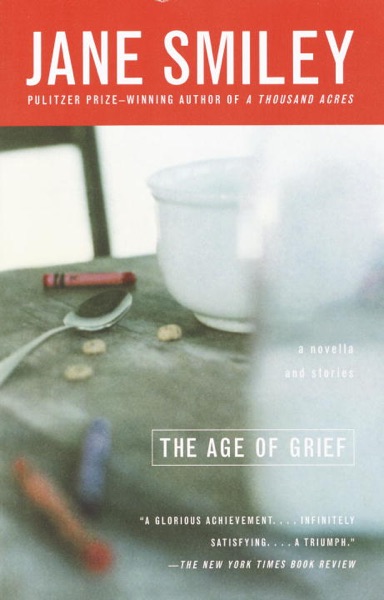
Five stories and a novella follow people discovering how little they understand the relationships they rely on. In the title novella, David Hurst shares a dental practice and three young daughters with his wife, Dana; suspecting she loves someone else, he hesitates to question her. Elsewhere, a lonely nurse envies the apparent closeness of her married neighbors, while a young poet receives a visit from married friends whose quarrels disrupt their time together.
Reader notes
Quiet, intimate literary fiction, attentive to private thoughts and small misunderstandings, the collection is more concerned with emotional uncertainty than dramatic confrontation. David’s questioning first-person narration keeps the longest piece close to the daily work of sustaining a family.
How it reads
Writing style
Direct
Tone
Intimate · Melancholic · Reflective
Structure
Anthology
Collection
Thematic
Driven by
Character · Relationships
Point of view
Mixed viewpoints
Setting
Domestic · Workplace
Reading complexity
Writing
3 / 5
Ideas
3 / 5
Structure
3 / 5
Background knowledge
1 / 5
About this profile
Collected’s assessment, not reader ratings. Complexity runs from 1 (least demanding) to 5 (most demanding).
Writing
How much attention the sentences and language require.
Ideas
How much interpretation or abstract reasoning the book asks of you.
Structure
How much you need to keep track of speakers, timelines and connections.
Background knowledge
Prior knowledge needed to follow the book, beyond what it explains.
Emotional intensity
Emotional pressure, from gentle (1) to intense (5). Separate from difficulty.
Themes
Family
Grief
Love
Marriage
Content notes
Violence
Mild
Sexual content
Mild
Swearing
Strong
Substance use
Mild
Abuse
None
Self-harm or suicide
None
Standing and awards
Established
National Book Critics Circle Award finalist, 1987
Questions readers ask
Is it hard to read?
Not really, the prose is direct and no prerequisite knowledge is needed. The challenge lies in following private thoughts and small misunderstandings, especially David’s questioning first-person narration as he hesitates to ask his wife about his suspicions.
Is it more about relationships or dramatic events?
Relationships carry the collection: five stories and a novella explore how little people understand those closest to them. The pace is measured, with emotional uncertainty and the daily work of sustaining a family taking precedence over dramatic confrontation.
How long is it?
About 224 pages in the Anchor Books 2002 edition.
How much sexual detail is there?
The content notes flag mild sexual content.
What strong content should I expect?
Strong language is the main content concern. Violence and substance use are mild, while the emotional focus rests on loneliness, marital uncertainty, and misunderstandings within relationships.
Which edition is shown here?
Anchor · 2002 · Paperback. ISBN 9780385721875.
How long does it take to read The Age of Grief?
About 4 hours 30 minutes at 50 pages an hour, based on the 224-page Anchor edition. Dense books can take longer.
About the author
Jane Smiley
Jane Smiley is an American novelist whose fiction ranges from family tragedy and intimate studies of marriage to broad institutional satire. Across these forms, she examines apparently stable social worlds under pressure, tracing how inheritance, ambition, money, desire, and private grievance reshape relationships. She adjusts her narrative method to the scale of the subject: A Thousand Acres uses Ginny’s first-person perspective to recast King Lear on an Iowa farm, while Moo distributes attention across more than a dozen plots to portray a Midwestern university as a network of competing interests. The Age of Grief narrows the focus, allowing marital uncertainty to gather through ordinary domestic routines. Her nonfiction extends this attention to the novel itself. Thirteen Ways of Looking at the Novel considers its history and nature across a span from The Tale of Genji to contemporary American women’s writing.