About 8 h 45 min · at 30 minutes a day, about 18 days
Estimated from the page count of this edition. Dense books can take longer than the estimate.
About the book
During the 1989–1990 academic year, a Midwestern agricultural university known as Moo U faces budget cuts as its faculty and administrators compete for money and influence. Radical horticulture chairman X clashes with economist Lionel Gift over research, while provost’s secretary Loraine Walker quietly keeps the institution running. Elsewhere on campus, four women sharing a dorm room negotiate college life, and student Bob Carlson secretly tends Earl Butz, a boar being fed to discover how large he can grow.
Reader notes
The campus satire is sprawling and slyly funny, shifting among students, staff, professors and even the hog. Its many overlapping stories require keeping track of a crowded cast, and the comedy can feel emotionally detached.
How it reads
Writing style
Descriptive · Dialogue-driven · Witty
Tone
Humorous · Playful · Satirical · Warm
Structure
Braided
Driven by
Character · Worldbuilding
Point of view
Multiple viewpoints
Setting
Midwestern United States
Reading complexity
Writing
3 / 5
Ideas
3 / 5
Structure
4 / 5
Background knowledge
1 / 5
About this profile
Collected’s assessment, not reader ratings. Complexity runs from 1 (least demanding) to 5 (most demanding).
Writing
How much attention the sentences and language require.
Ideas
How much interpretation or abstract reasoning the book asks of you.
Structure
How much you need to keep track of speakers, timelines and connections.
Background knowledge
Prior knowledge needed to follow the book, beyond what it explains.
Emotional intensity
Emotional pressure, from gentle (1) to intense (5). Separate from difficulty.
Themes
Ambition
Community
Family
Power
Wealth
Work
Content notes
Violence
Mild
Sexual content
Strong
Swearing
Mild
Substance use
Mild
Abuse
None
Self-harm or suicide
None
Standing and awards
Established
National Book Critics Circle Award finalist, 1995
Questions readers ask
Is it hard to keep track of everyone?
Somewhat. Many overlapping stories shift among students, staff, professors and even the hog, so keeping track of the crowded cast takes attention. The main challenge is following the braided stories across campus.
What kind of comedy is it?
The humor is sly campus satire, built around faculty and administrators competing for money and influence as an agricultural university faces budget cuts. The comedy can feel emotionally detached, even with its playful tone.
What strong content should I expect?
Strong sexual content is the main concern. Language, substance use and violence are mild; the sexual material is the strongest of these elements.
Who is it best suited to?
It suits someone who enjoys sprawling campus novels with a crowded cast and institutional rivalries. Faculty disputes, students sharing a dorm room and a secretary quietly keeping the university running share space with a student secretly tending a growing boar.
How long is it?
About 609 pages in the Wheeler Pub. 1995 edition. The pace varies as the narrative shifts among the university’s many overlapping stories.
Which edition is shown here?
Anchor · 2009 · Paperback. ISBN 9780307472762.
How long does it take to read Moo?
About 8 hours 45 minutes at 50 pages an hour, based on the 432-page Anchor edition. Dense books can take longer.
About the author
Jane Smiley
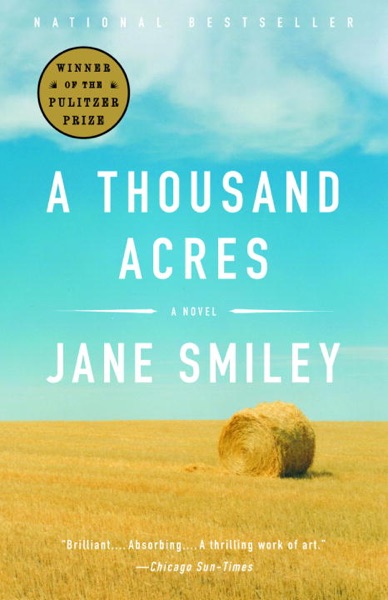
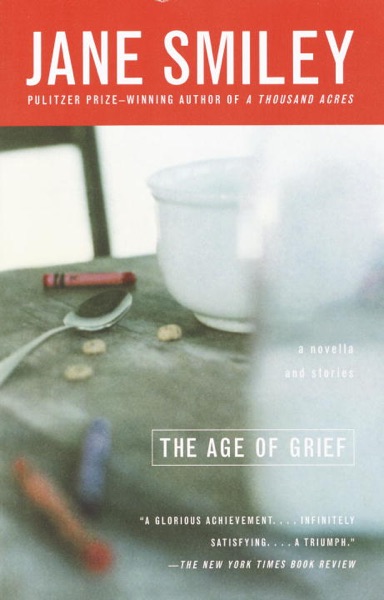
Jane Smiley is an American novelist whose fiction ranges from family tragedy and intimate studies of marriage to broad institutional satire. Across these forms, she examines apparently stable social worlds under pressure, tracing how inheritance, ambition, money, desire, and private grievance reshape relationships. She adjusts her narrative method to the scale of the subject: A Thousand Acres uses Ginny’s first-person perspective to recast King Lear on an Iowa farm, while Moo distributes attention across more than a dozen plots to portray a Midwestern university as a network of competing interests. The Age of Grief narrows the focus, allowing marital uncertainty to gather through ordinary domestic routines. Her nonfiction extends this attention to the novel itself. Thirteen Ways of Looking at the Novel considers its history and nature across a span from The Tale of Genji to contemporary American women’s writing.