About 5 h 45 min · at 30 minutes a day, about 12 days
Estimated from the page count of this edition. Dense books can take longer than the estimate.
About the book
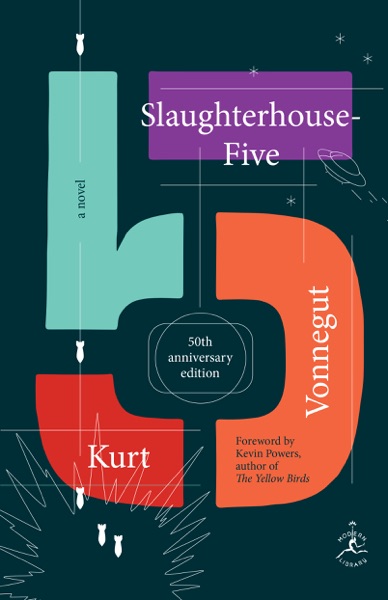
Billy Pilgrim moves without warning between his captivity in World War II, his postwar life as an optometrist in Ilium, New York, and encounters with aliens from Tralfamadore. His life keeps returning to Dresden, where he survives the firebombing as an American prisoner housed in a former slaughterhouse. Vonnegut interweaves Billy’s experiences with his own attempts to write about the destruction he witnessed there.
Reader notes
The literary antiwar novel is conversational and darkly funny, recounting graphic violence and mass death in plain, compact sentences. The language is accessible, but the chronology takes attention: scenes recur and connections accumulate across fragments, with little sense of a continuous forward-moving plot.
How it reads
Writing style
Direct · Fragmentary · Spare · Witty
Tone
Absurdist · Dark · Melancholic · Satirical
Structure
Fragmented · Multiple timelines · Nonlinear
Driven by
Character · Ideas · Voice
Point of view
Mixed viewpoints
Setting
Dresden, Germany
Reading complexity
Writing
3 / 5
Ideas
4 / 5
Structure
4 / 5
Background knowledge
1 / 5
About this profile
Collected’s assessment, not reader ratings. Complexity runs from 1 (least demanding) to 5 (most demanding).
Writing
How much attention the sentences and language require.
Ideas
How much interpretation or abstract reasoning the book asks of you.
Structure
How much you need to keep track of speakers, timelines and connections.
Background knowledge
Prior knowledge needed to follow the book, beyond what it explains.
Emotional intensity
Emotional pressure, from gentle (1) to intense (5). Separate from difficulty.
Themes
Memory
Morality
Mortality
Survival
Trauma
War
Content notes
Violence
Strong
Sexual content
Mild
Swearing
Strong
Substance use
Mild
Abuse
Mild
Self-harm or suicide
Mild
Standing and awards
Canonical
National Book Award finalist, 1970
Hugo Award finalist, 1970
Nebula Award nominee, 1969
Modern Library 100 Best Novels
Library of America
McCaffery's top 100 fiction
Widely translated and studied
Questions readers ask
Is it hard to read?
The conversational language and plain, compact sentences are accessible, but the chronology takes attention. Billy moves without warning between different periods of his life, and connections accumulate across recurring fragments.
Does it have a fast-moving plot?
Not really, despite its brisk pace. Scenes return to Billy’s wartime captivity, postwar life, and alien encounters, with little sense of a continuous forward-moving plot; character, ideas, and voice carry the narrative.
How dark is it?
Graphic violence and mass death are central, especially the destruction of Dresden, and strong language is also present. The conversational telling combines dark comedy with a melancholic treatment of war, trauma, and survival.
How should I approach the shifting timelines?
Pay attention to recurring scenes and the connections that build between fragments. Billy’s experiences keep returning to Dresden, while Vonnegut interweaves his own attempts to write about the destruction he witnessed there.
How long is it?
About 288 pages in the Dial Press Trade Paperback 1999 edition.
Which edition is shown here?
Dial Press Trade Paperback · 1999 · Paperback. ISBN 9780385333849.
How long does it take to read Slaughterhouse-Five?
About 5 hours 45 minutes at 50 pages an hour, based on the 288-page Dial Press Trade Paperback edition. Dense books can take longer.
About the author
Kurt Vonnegut
Kurt Vonnegut was an American author whose fiction brought science-fiction devices, wartime memory, and social satire into a plainspoken literary form. His concise sentences, brief paragraphs, and conversational tone make room for abrupt shifts in time, metafictional intrusions, cartoons, invented scriptures, and recurring characters. He returned to the ways institutions and explanatory systems can reduce human beings to functions, whether through war, technology, religion, commerce, or political ideology. His experience as a prisoner of war informs Slaughterhouse-Five, where Billy Pilgrim moves helplessly among Dresden, domestic life, and alien captivity in a fragmented narrative that refuses heroic progression. Cat’s Cradle uses the apocalyptic substance ice-nine and the knowingly fabricated religion of Bokononism to place scientific irresponsibility beside the human need for consoling stories. In Breakfast of Champions, blunt narration, authorial interruptions, and simple drawings expose a society organized by money, race, environmental damage, and fantasies of free will. Vonnegut’s dark comedy often begins with an absurd premise, then follows its moral consequences with unusual directness.