Is it hard to read?
No, the prose is conversational, direct and witty, and the pace is brisk. The account follows Bryson’s travels chronologically, with memories of earlier trips woven through it.
 collected

Nonfiction · Essays · Travel
About 6 h 30 min · at 30 minutes a day, about 13 days
Estimated from the page count of this edition. Dense books can take longer than the estimate.
Returning to Europe in 1990, Bill Bryson revisits places he first encountered as a young backpacker, beginning in Hammerfest, Norway, in search of the northern lights. His route takes him through Paris, Amsterdam, Rome and Vienna toward Istanbul, while memories of his earlier travels with Stephen Katz punctuate the hotels, trains, restaurants and sightseeing of the present journey.
The travel memoir is often more concerned with the frustrations of being abroad than with describing famous sights. Bryson's humor is caustic and sometimes crude, and national stereotypes and complaints occupy plenty of room alongside his observations of unfamiliar places and customs.
Collected’s assessment, not reader ratings. Complexity runs from 1 (least demanding) to 5 (most demanding).
No, the prose is conversational, direct and witty, and the pace is brisk. The account follows Bryson’s travels chronologically, with memories of earlier trips woven through it.
Not really, it is a reflective travel memoir built around personal experience. Hotels, trains, restaurants and sightseeing provide material for observations and complaints rather than practical travel guidance.
Bryson’s humor is caustic, irreverent and sometimes crude. Frustrations with being abroad, national stereotypes and complaints occupy plenty of space alongside observations of unfamiliar places and customs.
Memories of Bryson’s earlier travels with Stephen Katz punctuate the account of his return to Europe in 1990. Revisiting places he encountered as a young backpacker gives memory a recurring role.
320 pages in the William Morrow Paperbacks 1992 paperback edition.
William Morrow Paperbacks · 1992 · Paperback. ISBN 9780380713806.
About 6 hours 30 minutes at 50 pages an hour, based on the 320-page William Morrow Paperbacks edition. Dense books can take longer.
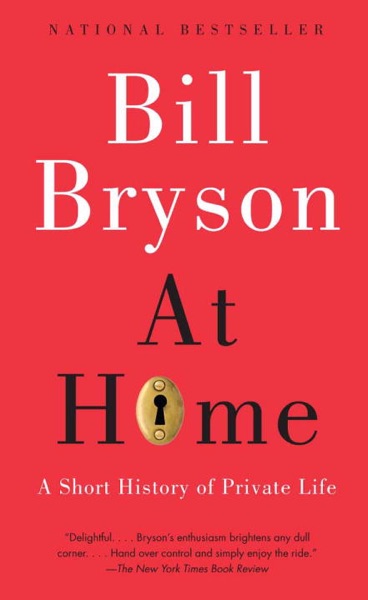
Bill Bryson is an American-British nonfiction writer whose subjects range from travel and language to science and domestic history. A former newspaper journalist, he gathers large quantities of information and arranges them as a guided tour, using brisk explanations, comic anecdotes, and digressions into the people and accidents behind accepted knowledge. His travel books add self-deprecation and close social observation to that method. In A Walk in the Woods, an inadequately prepared Appalachian Trail hike becomes the spine for excursions into ecology, conservation, and the communities beside the route. A Short History of Nearly Everything applies a similar curiosity at cosmic scale, moving from atoms and geology to evolution and human vulnerability. At Home reverses the scale again, using the rooms of a rectory to trace commerce, architecture, technology, and changing habits. His prose is conversational and direct, often moving from an ordinary object or bodily fact to a much larger history. He repeatedly attends to how knowledge is made and how error and eccentricity complicate orderly accounts of progress.