About 11 h 45 min · at 30 minutes a day, about 24 days
Estimated from the page count of this edition. Dense books can take longer than the estimate.
About the book
Bill Bryson uses his Norfolk rectory as the organizing map for a history of domestic life, asking how people came to eat, sleep, and wash as they do. The bathroom leads into hygiene, the kitchen into food and the spice trade, while furniture and plumbing connect everyday comforts to inventions, commerce, and changing ideas about privacy.
Reader notes
Conversational and gently humorous, the book moves through anecdotes and historical detours rather than a continuous chronological account. The rooms provide a loose route through a much wider subject, so expect frequent excursions beyond the house and plenty of detail about ordinary objects.
How it reads
Writing style
Conversational · Descriptive · Witty
Tone
Humorous · Reflective
Structure
Episodic · Framed
Driven by
Ideas · Information
Setting
Norfolk rectory
Evidence style
Research synthesis
Practical orientation
Reflective
Nonfiction form
Explanation synthesis · History
Reading complexity
Writing
3 / 5
Ideas
3 / 5
Structure
3 / 5
Background knowledge
2 / 5
About this profile
Collected’s assessment, not reader ratings. Complexity runs from 1 (least demanding) to 5 (most demanding).
Writing
How much attention the sentences and language require.
Ideas
How much interpretation or abstract reasoning the book asks of you.
Structure
How much you need to keep track of speakers, timelines and connections.
Background knowledge
Prior knowledge needed to follow the book, beyond what it explains.
Emotional intensity
Emotional pressure, from gentle (1) to intense (5). Separate from difficulty.
Themes
Class
Family
Inequality
Technology and society
Work
Content notes
Violence
Mild
Sexual content
Mild
Swearing
None
Substance use
Mild
Abuse
Mild
Self-harm or suicide
None
Questions readers ask
Is it hard to read?
Not really, though the historical detail and frequent detours take some attention. Bryson’s conversational prose and gentle humor make the explanations approachable; the challenge is following the excursions rather than untangling difficult language.
Does it follow the history of the home chronologically?
No, the rooms of Bryson’s Norfolk rectory provide a loose route through domestic history. The bathroom leads into hygiene and the kitchen into food and the spice trade, with anecdotes taking the account well beyond the house.
Is it useful for practical advice about the home?
Not really, it explains how domestic habits and comforts developed rather than offering household instructions. Furniture, plumbing, eating, sleeping, and washing become ways to explore inventions, commerce, and changing ideas about privacy.
What connects the different historical detours?
Ordinary objects and domestic routines connect the excursions, linking everyday comforts to wider changes in technology, commerce, class, and inequality. The emphasis is on how familiar ways of living came to be.
How long is it?
About 592 pages in the Anchor Books 2011 edition.
Which edition is shown here?
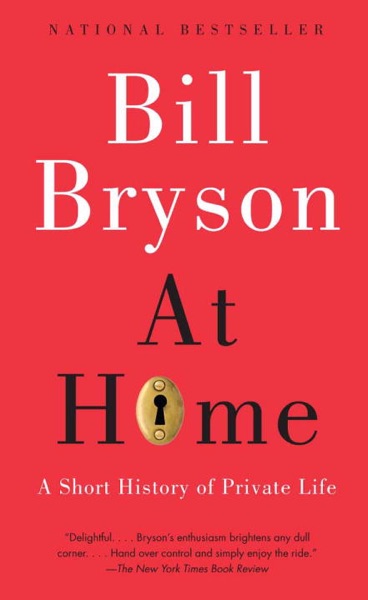
Anchor Books · 2011 · Paperback. ISBN 9780767919395.
How long does it take to read At Home?
About 11 hours 45 minutes at 50 pages an hour, based on the 592-page Anchor Books edition. Dense books can take longer.
About the author
Bill Bryson
Bill Bryson is an American-British nonfiction writer whose subjects range from travel and language to science and domestic history. A former newspaper journalist, he gathers large quantities of information and arranges them as a guided tour, using brisk explanations, comic anecdotes, and digressions into the people and accidents behind accepted knowledge. His travel books add self-deprecation and close social observation to that method. In A Walk in the Woods, an inadequately prepared Appalachian Trail hike becomes the spine for excursions into ecology, conservation, and the communities beside the route. A Short History of Nearly Everything applies a similar curiosity at cosmic scale, moving from atoms and geology to evolution and human vulnerability. At Home reverses the scale again, using the rooms of a rectory to trace commerce, architecture, technology, and changing habits. His prose is conversational and direct, often moving from an ordinary object or bodily fact to a much larger history. He repeatedly attends to how knowledge is made and how error and eccentricity complicate orderly accounts of progress.