Is it hard to read?
Not really. The prose is conversational and witty, and the pace is brisk. The ideas about language, belief and politics require some reflection, but the separate essays keep the structure straightforward.
 collected
Nonfiction · Essays · Travel · Politics & Government
About 5 h 30 min · at 30 minutes a day, about 11 days
Estimated from the page count of this edition. Dense books can take longer than the estimate.
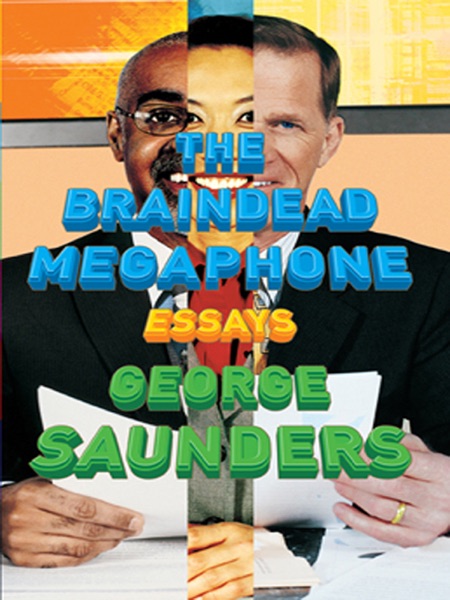
George Saunders considers how language directs attention and belief, from television news to the sentences that first made him want to write. The title essay imagines public discourse as a party taken over by a man with a megaphone. Elsewhere, he visits Dubai’s luxury hotels, investigates a teenage meditator in Nepal, accompanies Minutemen along the US–Mexico border, and writes about reading Twain, Vonnegut, Forbes and Barthelme.
The collection shifts from earnest literary appreciation and sympathetic reporting to absurd comic sketches, including an advice column whose optimism runs out of control. Its variety matters: these are separate excursions into politics, travel and writing, without a sustained argument running through every piece.
Collected’s assessment, not reader ratings. Complexity runs from 1 (least demanding) to 5 (most demanding).
Not really. The prose is conversational and witty, and the pace is brisk. The ideas about language, belief and politics require some reflection, but the separate essays keep the structure straightforward.
Both: earnest literary appreciation and sympathetic reporting sit alongside absurd comic sketches. An advice column whose optimism runs out of control gives a sense of the humor, while the reporting explores politics and travel.
No. These are separate excursions into politics, travel and writing, without a sustained argument connecting every piece. Language, attention and belief provide shared concerns rather than a single line of reasoning.
It suits someone drawn to reflective essays about public discourse, travel and literature. Saunders combines reporting, personal experience and satire, with subjects ranging from Dubai’s luxury hotels to the writers who shaped his interest in sentences.
272 pages in the Riverhead Books 2007 paperback edition.
Riverhead Books · 2007 · Paperback. ISBN 9781594482564.
About 5 hours 30 minutes at 50 pages an hour, based on the 272-page Riverhead Books edition. Dense books can take longer.
George Saunders is an American writer whose fiction brings satire, absurdism, and moral inquiry to the pressures of contemporary life. Before joining the creative-writing faculty at Syracuse University, he worked as a technical writer and geophysical engineer. His later fiction repeatedly returns to workplaces, institutions, and systems that turn exploitation into routine. Collections including Pastoralia and Tenth of December place vulnerable people inside corporate, domestic, and military structures, using dark comedy, conversational voices, and abrupt shifts of perspective to test how sympathy survives fear and self-interest. In Persuasion Nation and The Brief and Frightening Reign of Phil, advertising and political rhetoric become engines of grotesque social behavior. Lincoln in the Bardo extends his experimental methods into the novel, assembling competing voices around grief and attachment. His nonfiction has a related practical focus: Swim in a Pond in the Rain studies Russian stories passage by passage, asking how narrative choices direct attention, expectation, and compassion. His work is distinguished by its combination of formal play, comic severity, and sustained ethical attention.

Hunter S. Thompson
Politics & Government · Essays and criticism · Cultural criticism

John Steinbeck
Travel · Politics & Government · Essays and criticism

Jonathan Franzen
Essays and criticism · Cultural criticism · Personal essays


Evan Osnos
Politics & Government · Essays and criticism · Cultural criticism