Estimated from the page count of this edition. Dense books can take longer than the estimate.
About the book
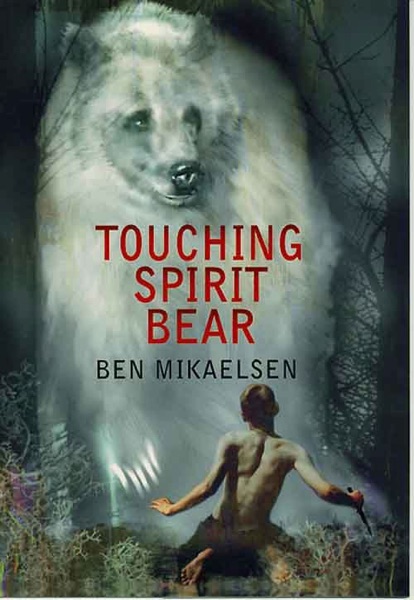
Facing prison for a beating that leaves his classmate Peter with lasting injuries, fifteen-year-old Cole Matthews accepts Circle Justice, a restorative justice program that sends him to a remote Alaskan island. He thinks he can manipulate the arrangement despite guidance from his parole officer and a Tlingit elder. When he challenges a white Spirit Bear, he is left badly injured and fighting to survive.
Reader notes
The survival story is interrupted by flashbacks to the assault, the justice proceedings and Cole's abusive home. Physical danger and questions of responsibility run through this coming-of-age novel: the violence is severe, and Cole's own suffering is considered alongside the harm he inflicts.
How it reads
Writing style
Atmospheric · Descriptive · Direct
Tone
Dark · Hopeful · Reflective · Tense
Structure
Nonlinear
Driven by
Character · Ideas · Plot
Point of view
Third person, limited
Setting
Remote Alaskan island
Reading complexity
Writing
2 / 5
Ideas
3 / 5
Structure
2 / 5
Background knowledge
1 / 5
About this profile
Collected’s assessment, not reader ratings. Complexity runs from 1 (least demanding) to 5 (most demanding).
Writing
How much attention the sentences and language require.
Ideas
How much interpretation or abstract reasoning the book asks of you.
Structure
How much you need to keep track of speakers, timelines and connections.
Background knowledge
Prior knowledge needed to follow the book, beyond what it explains.
Emotional intensity
Emotional pressure, from gentle (1) to intense (5). Separate from difficulty.
Not really, the prose is direct, though the survival story is interrupted by flashbacks to Cole’s assault, justice proceedings and abusive home. The greater challenge is emotional: severe violence and questions of responsibility make it an intense read.
How graphic or upsetting does it get?
Strong violence and abuse are central: Cole beats a classmate badly enough to cause lasting injuries, suffers severe injuries himself and comes from an abusive home. His suffering is considered alongside the harm he inflicts.
Is it mainly a wilderness survival adventure?
No, survival on a remote Alaskan island shares the focus with Cole’s responsibility for injuring Peter and his participation in restorative justice. Physical danger gives the story tension, while flashbacks explore the assault, justice proceedings and abuse at home.
Does it stay dark throughout?
No, the tone combines darkness and tension with hope and reflection. Cole’s violence, abusive home and struggle to survive sit alongside themes of redemption and transformation, keeping responsibility central to the coming-of-age story.
Do I need to read anything before it?
No, it is the first entry in the Spirit Bear series. Cole’s assault on Peter and acceptance of Circle Justice establish the situation that sends him to the island.
How long is it?
256 pages in the HarperCollins 2002 paperback edition.
Which edition is shown here?
HarperCollins · 2002 · Paperback. ISBN 9780380805600.
How long does it take to read Touching Spirit Bear?
About 5 hours at 50 pages an hour, based on the 256-page HarperCollins edition. Dense books can take longer.
About the author
Ben Mikaelsen
Ben Mikaelsen is a Bolivian American writer of children’s literature whose novels place young people and other vulnerable characters under sustained physical and social pressure. His direct, descriptive prose favors clear action and long character arcs, often using isolation, institutions, or friendship to examine harm and dignity. Touching Spirit Bear turns a remote Alaskan survival plot into a reckoning with violence through restorative justice, while Petey spans decades to follow a man with cerebral palsy whom institutions mistakenly regard as incapable of thought. Mikaelsen builds moral questions into concrete circumstances, moving between urgent ordeal and patient observation of relationships.