
Is it hard to read?
Somewhat. The poetic dialogue and choral passages demand attention to competing claims, especially as Medea challenges the men who control her position. The action is linear and brisk, but the arguments need careful reading.
 collected
About 1 h 15 min · at 30 minutes a day, about 3 days
Estimated from the page count of this edition. Dense books can take longer than the estimate.
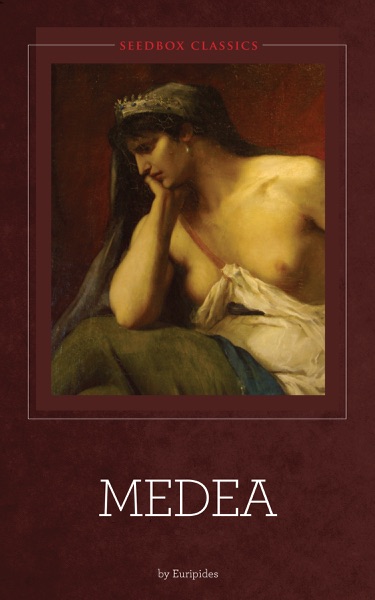
In the Corinth of Greek myth, Medea faces exile after Jason, the husband she helped win the Golden Fleece, abandons her for the king’s daughter. Far from her homeland and responsible for their two children, she persuades King Creon to grant her one more day before banishment. That brief reprieve leaves her time to pursue revenge against Jason.
The arguments are as fierce as the emotions: Medea challenges the men who control her position while a chorus of Corinthian women listens and responds. This Greek tragedy unfolds through confrontations and choral passages, demanding attention to the speakers’ competing claims. Marital betrayal and severe violence within a family are its painful subjects.
Collected’s assessment, not reader ratings. Complexity runs from 1 (least demanding) to 5 (most demanding).
Canonical
Somewhat. The poetic dialogue and choral passages demand attention to competing claims, especially as Medea challenges the men who control her position. The action is linear and brisk, but the arguments need careful reading.
Strong violence and abuse within a family are central, alongside the pain of marital betrayal. Medea’s pursuit of revenge gives the tragedy a bleak, tense atmosphere and severe emotional intensity.
About 62 pages in the Ivan R. Dee 2000 edition. The action moves briskly, though the poetic confrontations and choral passages call for close attention.
Follow how Medea, the men she confronts, and the chorus of Corinthian women argue about her position. Her threatened exile connects the struggle over marriage and family to questions of power, gender, and displacement.
Ivan R. Dee · 2000 · Paperback. ISBN 9781566633215.
About 1 hour 15 minutes at 50 pages an hour, based on the 62-page Ivan R. Dee edition. Dense books can take longer.
Euripides was a tragedian of classical Athens and one of the three Greek tragic dramatists whose plays survive complete. His drama proceeds through sustained confrontations in which private injuries become disputes about civic authority, family obligation, status, and divine power. The language is poetic but strongly argumentative, giving characters room to explain themselves while exposing the pressure that fear, pride, or precarious circumstances place on their reasoning. In Medea, a broken marriage quickly becomes a political crisis: Jason’s new alliance leaves Medea and her children vulnerable, and Euripides follows her from public humiliation through a carefully planned retaliation. The play keeps her intelligence in view without simplifying the judgment she provokes. The Bacchae stages a different contest, between Pentheus’s attempt to suppress a new cult and Dionysus’s demand for recognition. Its disguised god, resistant ruler, and ritual activity beyond the city create a tightening structure in which mortal command repeatedly misreads the force gathering against it.


