Estimated from the page count of this edition. Dense books can take longer than the estimate.
About the book
On a ranch in northern Mexico during the Mexican Revolution, Tita is forbidden to marry: Mama Elena insists that her youngest daughter remain home to care for her. Pedro, the man Tita loves, marries her sister Rosaura to stay near her, leaving Tita to cook their wedding feast. In the kitchen where she was raised, Tita’s suppressed feelings pass into her food and alter the people who eat it.
Reader notes
Twelve monthly chapters begin with recipes woven into the family story. Earthy humor, extravagant emotion, and matter-of-fact magic run through this historical love story, whose sensuality includes frank sexual scenes. Mama Elena’s abuse of Tita is as much a part of the household as its food and traditions.
How it reads
Writing style
Atmospheric · Descriptive · Lyrical
Tone
Atmospheric · Melancholic · Romantic · Warm
Structure
Episodic · Linear
Driven by
Atmosphere · Character · Relationships
Point of view
Third person, omniscient
Setting
Mexico
Reading complexity
Writing
3 / 5
Ideas
3 / 5
Structure
3 / 5
Background knowledge
1 / 5
About this profile
Collected’s assessment, not reader ratings. Complexity runs from 1 (least demanding) to 5 (most demanding).
Writing
How much attention the sentences and language require.
Ideas
How much interpretation or abstract reasoning the book asks of you.
Structure
How much you need to keep track of speakers, timelines and connections.
Background knowledge
Prior knowledge needed to follow the book, beyond what it explains.
Emotional intensity
Emotional pressure, from gentle (1) to intense (5). Separate from difficulty.
Tita’s suppressed feelings pass into her cooking and alter the people who eat it. The magic is treated matter-of-factly within a family love story, alongside earthy humor, extravagant emotion, and life on a ranch in northern Mexico during the Mexican Revolution.
How central are the recipes?
Recipes begin each of the twelve monthly chapters and are woven into the family story. Cooking connects Tita’s emotional life to the household: even the wedding feast she prepares for Pedro and her sister becomes part of that connection.
How explicit is the romance?
The content notes flag strong sexual content.
What difficult subjects should I expect?
Strong abuse is central to the household, particularly Mama Elena’s treatment of Tita. She forbids Tita to marry and insists that her youngest daughter remain home to care for her, making family obligation and oppression part of the romantic story.
Is it hard to read?
Not really. The story follows a linear sequence through twelve monthly chapters, with a moderate pace and no prerequisite knowledge needed. The atmospheric, descriptive, lyrical prose and extravagant emotions give it some texture to work through.
How long is it?
256 pages in the Anchor Books 1995 trade paperback edition.
Which edition is shown here?
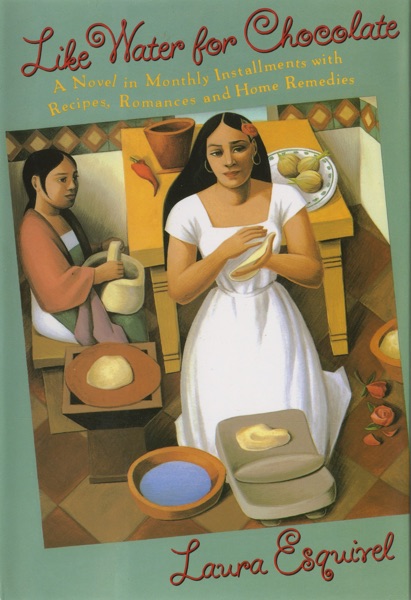
Anchor Books · 1995 · Trade Paperback. ISBN 9780385420174.
What is the order of books in Como agua para chocolate?
1. Like Water for Chocolate.
How long does it take to read Like Water for Chocolate?
About 5 hours at 50 pages an hour, based on the 256-page Anchor Books edition. Dense books can take longer.
About the author
Laura Esquivel
Laura Esquivel is a Mexican novelist and screenwriter whose fiction turns domestic practices, especially cooking, into forms of memory, knowledge, and emotional expression. After beginning as a screenwriter, she made her fiction debut with Like Water for Chocolate, a hybrid of family romance, recipe book, home-remedy collection, and serialized narrative. Its magical realism makes feeling tactile and communal, as private emotions pass through food into the wider household. Esquivel’s work also ranges beyond culinary fiction: The Law of Love combines science fiction with music and graphic sequences, while Malinche approaches conquest through language, mediation, and cultural collision. Across these forms, unconventional structures carry intimate and historical experience.