
Is it hard to read?
Not really, though the lyrical descriptions and leisurely movement call for some patience. The neighborhood episodes have a loose connecting thread in the party preparations, and no specialist background is needed.
 collected
About 4 h 30 min · at 30 minutes a day, about 9 days
Estimated from the page count of this edition. Dense books can take longer than the estimate.
On Monterey’s sardine-canning waterfront during the Great Depression, Mack and his unemployed friends live in a converted fish-meal shack, getting by through barter and ingenious schemes. They decide to thank Doc, the marine biologist whose laboratory is a neighborhood gathering place, by throwing him a party. Their efforts to finance it draw in local grocer Lee Chong, among a community that also includes Dora and the women of her brothel.
The novel wanders through neighborhood episodes, keeping the party preparations as a loose connecting thread. Affectionate humor and comic mishaps alternate with loneliness and brief, bleak stories involving suicide. Heavy drinking is part of everyday life, and the leisurely structure offers a portrait of a community more than a tightly driven plot.
Collected’s assessment, not reader ratings. Complexity runs from 1 (least demanding) to 5 (most demanding).
Canonical
Not really, though the lyrical descriptions and leisurely movement call for some patience. The neighborhood episodes have a loose connecting thread in the party preparations, and no specialist background is needed.
Not really. Mack and his friends’ plans to throw Doc a party connect the neighborhood episodes, but the emphasis falls on atmosphere, characters, and relationships rather than tightly driven action.
Suicide is a strong element in brief, bleak stories, and heavy drinking is part of everyday life. Affectionate humor and comic mishaps alternate with loneliness, giving the neighborhood portrait a melancholic side.
It suits someone who enjoys leisurely portraits of a community, with friendship, class, inequality, and isolation woven through everyday encounters. The appeal lies in the waterfront atmosphere, witty prose, and relationships among the neighborhood’s inhabitants.
224 pages in the Penguin Books 1994 paperback edition.
Penguin Books · 1994 · Paperback. ISBN 9780140187373.
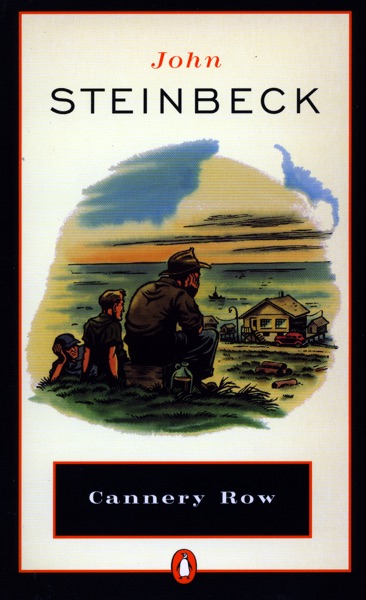
2. Cannery Row.
About 4 hours 30 minutes at 50 pages an hour, based on the 224-page Penguin Books edition. Dense books can take longer.
John Steinbeck (1902–1968) was an American novelist whose memories of California gave his fiction a strong regional identity. He wrote about people whose need for work, security, dignity, or independence placed them at the mercy of employers, banks, landowners, and other institutions. His direct, descriptive prose could serve the compact tragedy of Of Mice and Men or widen into the family journey and collective account of dispossession in The Grapes of Wrath. Steinbeck also worked beyond the social tragedy most closely associated with him. East of Eden turns the Salinas Valley into the setting for a multigenerational study of guilt, rejection, and moral choice, while Cannery Row uses comedy and an episodic community structure to portray friendship and dignity amid scarcity. Across these changes in scale and tone, he remained attentive to the ways economic conditions shape relationships and restrict choice.


