
Is it easy for a beginning reader to follow?
Yes, short sentences and a repeated question make the bird’s search easy to follow. The direct dialogue and brisk sequence of encounters support independent reading as well as reading aloud.
 collected
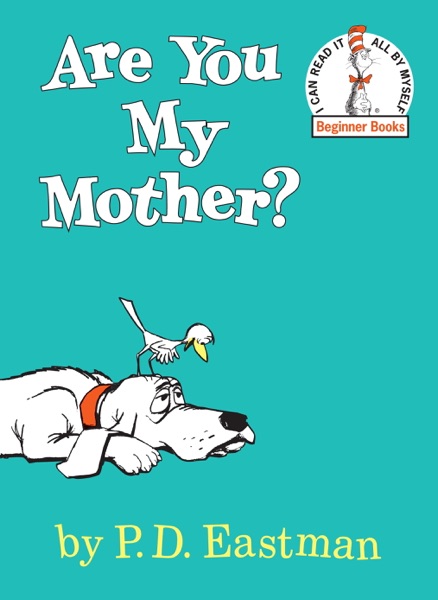
Fiction · Children's · Early reader · Comedy
About 1 h 30 min · at 30 minutes a day, about 3 days
Estimated from the page count of this edition. Dense books can take longer than the estimate.
A newly hatched bird leaves his nest to search for his mother, who has gone looking for food. Having never seen her, he asks a kitten, a hen and a dog whether they might be his mother, eventually approaching a large machine he calls a Snort.
Short sentences and a repeated question keep this illustrated early reader easy to follow, whether read independently or aloud with young children. Much of the humor lies in what the pictures reveal: children can recognize the bird’s mistakes before he does, while his earnest search carries the story from one unlikely encounter to the next.
Collected’s assessment, not reader ratings. Complexity runs from 1 (least demanding) to 5 (most demanding).
Yes, short sentences and a repeated question make the bird’s search easy to follow. The direct dialogue and brisk sequence of encounters support independent reading as well as reading aloud.
Yes, the repeated question gives the reading a recurring pattern, while the illustrations let young children recognize the bird’s mistakes before he does. That gap between what children see and what the bird understands supplies much of the humor.
The tone is warm, playful and hopeful. The bird’s earnest search for his mother moves through unlikely encounters with animals and a large machine he calls a Snort, combining family and belonging with visual humor.
About 72 pages in the Beginner Books 1960 edition. Short sentences, illustrations and a brisk sequence of encounters keep the reading easy to follow.
Beginner Books · 1960 · Hardcover. ISBN 9780394800189.
About 1 hour 30 minutes at 50 pages an hour, based on the 72-page Beginner Books edition. Dense books can take longer.
P. D. Eastman was an American children’s author and illustrator who also worked as a screenwriter and storyboard artist, including on the Mr. Magoo series. A colleague and protégé of Theodor Geisel, he developed a style built on direct sentences, repetition, brisk action, and comic escalation. His animal characters often learn by moving through a problem rather than having it explained to them. In Are You My Mother?, a repeated question turns a search for belonging into a chain of increasingly improbable encounters; Go, Dog. Go! uses traffic, spatial oppositions, and recurring exchanges to teach through motion and play. Sam and the Firefly and The Best Nest likewise pair simple adventures with consequences, disagreement, and changing judgment. Eastman’s distinction lies in the close fit between word and picture: limited vocabulary does not flatten the story, but becomes the mechanism for pace, suspense, and humor.


