Is it hard to read?
Somewhat. The prose is spare, but the fragmented structure and philosophical puzzles about language, identity, and storytelling demand attention. The challenge comes from interpreting what happens as much as following the cases.
 collected
Fiction · Novel · Literary Fiction · Mystery & Thriller
About 7 h 45 min · at 30 minutes a day, about 16 days
Estimated from the page count of this edition. Dense books can take longer than the estimate.
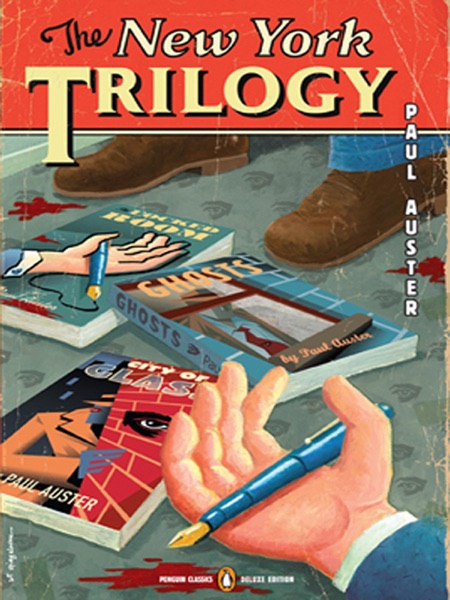
Across three connected novels set in New York, writers and detectives become absorbed in strangers’ lives. In City of Glass, a midnight phone call draws detective novelist Quinn into an actual case; in Ghosts, a detective named Blue watches Black from a rented room. The Locked Room follows the childhood friend of a vanished writer, Fanshawe, whose wife, baby, and unpublished manuscripts remain behind.
The prose is spare, but the philosophical puzzles about language, identity, and storytelling demand attention. These are experimental literary mysteries, with long stretches of watching, thinking, and interpreting rather than conventional detective work. Severe child abuse is central to the first novel’s case.
Collected’s assessment, not reader ratings. Complexity runs from 1 (least demanding) to 5 (most demanding).
Canonical
Somewhat. The prose is spare, but the fragmented structure and philosophical puzzles about language, identity, and storytelling demand attention. The challenge comes from interpreting what happens as much as following the cases.
No. The cases involve long stretches of watching, thinking, and interpreting rather than conventional detective work. The pace is measured, with character and ideas sharing the focus with mystery.
It comprises three connected novels: City of Glass, Ghosts, and The Locked Room. Their premises involve a novelist drawn into a case, a detective watching a stranger, and the childhood friend of a vanished writer.
Severe child abuse is central to the case in City of Glass, and sexual content is strong. The abuse is part of the first novel’s central mystery, so it deserves particular consideration before starting.
It suits someone interested in experimental literary mysteries that explore identity, obsession, isolation, and the limits of knowledge. Spare, atmospheric prose accompanies a cerebral, melancholic, and unsettling tone.
384 pages in the Penguin Books 1990 paperback edition.
Penguin Books · 1990 · Paperback. ISBN 9780140131550.
About 7 hours 45 minutes at 50 pages an hour, based on the 384-page Penguin Books edition. Dense books can take longer.
Paul Auster was an American novelist, poet, essayist, screenwriter, translator, and filmmaker whose work moved readily among literary forms. He edited The Random House Book of Twentieth-Century French Poetry and later divided his attention among fiction, memoir, essays, and film. His novels are known for lucid, often confessional prose joined to suspenseful structures, sudden reversals, and autobiographical elements. The New York Trilogy turns the detective story into an inquiry about identity and interpretation, while Leviathan similarly uses investigation and competing accounts to test how a life can be understood. Chance, doubling, and unstable selves recur throughout his fiction, reaching their most expansive form in 4 3 2 1, which follows four possible lives from a single beginning. Yet his range also includes the canine fable Timbuktu and the conversational tragicomedy of The Brooklyn Follies. New York is a frequent setting, but Auster’s deeper subject is the way accident, storytelling, and the search for meaning reshape a person’s sense of self.


Luigi Pirandello
Literary Fiction · Literary fiction · Experimental fiction