About 11 h 30 min · at 30 minutes a day, about 24 days
Estimated from the page count of this edition. Dense books can take longer than the estimate.
About the book
In 1939, Liesel Meminger arrives at a foster home near Munich after her little brother's death. Unable to read the books she begins stealing, she learns with patient help from her foster father, Hans Hubermann. As war closes in, books connect her with neighbors sheltering from bombing raids and with Max, a Jewish man the Hubermanns hide in their basement at risk to their own lives.
Reader notes
Death narrates this YA historical novel with dark humor, frequent asides, and unusual images that can take some getting used to. Affection and ordinary neighborhood life give warmth to a story shaped by grief, Nazi persecution, and wartime violence; the interrupted narration makes it more reflective than a straightforward wartime adventure.
How it reads
Writing style
Atmospheric · Experimental · Lyrical · Poetic
Tone
Atmospheric · Dark · Intimate · Melancholic
Structure
Fragmented · Linear
Driven by
Character · Relationships · Voice
Point of view
First person · Third person, omniscient
Setting
Nazi Germany
Reading complexity
Writing
3 / 5
Ideas
3 / 5
Structure
3 / 5
Background knowledge
2 / 5
About this profile
Collected’s assessment, not reader ratings. Complexity runs from 1 (least demanding) to 5 (most demanding).
Writing
How much attention the sentences and language require.
Ideas
How much interpretation or abstract reasoning the book asks of you.
Structure
How much you need to keep track of speakers, timelines and connections.
Background knowledge
Prior knowledge needed to follow the book, beyond what it explains.
Emotional intensity
Emotional pressure, from gentle (1) to intense (5). Separate from difficulty.
Themes
Friendship
Grief
Knowledge and truth
Love
Mortality
Oppression
Content notes
Violence
Strong
Sexual content
Mild
Swearing
Strong
Substance use
Mild
Abuse
Mild
Self-harm or suicide
Mild
Standing and awards
Established
National Jewish Book Awards, 2006
Printz Award honor, 2007
Questions readers ask
Is it hard to read?
Somewhat. Death narrates with frequent asides, unusual images, and dark humor that can take some getting used to. The interrupted narration and poetic prose make the reading more reflective than a straightforward wartime adventure.
How sad is it?
Grief and mortality are central, beginning with Liesel’s little brother’s death and continuing through Nazi persecution and wartime violence. Affection, friendship, and ordinary neighborhood life provide warmth, but the story remains emotionally intense and tragic.
What strong content should I expect?
Strong wartime violence and strong language accompany a story shaped by grief and Nazi persecution. Liesel experiences her little brother’s death, and her foster family risks their lives by hiding a Jewish man in their basement.
Is it a fast-paced wartime story?
No. The pace is measured, with attention to characters, relationships, and the books that connect Liesel to people around her. Death’s frequent interruptions give the story a reflective rhythm even as war closes in.
How long is it?
About 576 pages in the Alfred A. Knopf 2007 edition. The measured pace and interrupted narration give those pages a reflective rhythm.
Which edition is shown here?
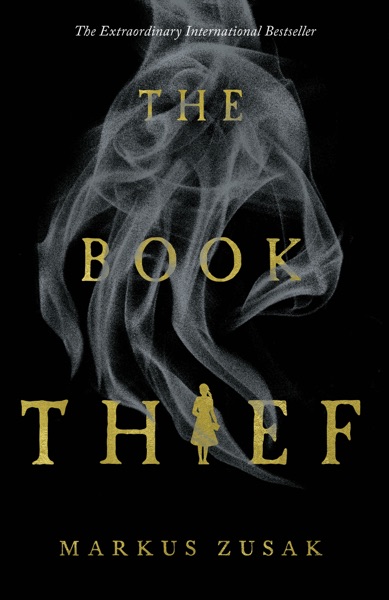
Alfred A. Knopf · 2007 · Trade Paperback. ISBN 9780375842207.
How long does it take to read The Book Thief?
About 11 hours 30 minutes at 50 pages an hour, based on the 576-page Alfred A. Knopf edition. Dense books can take longer.
About the author
Markus Zusak
Markus Zusak is an Australian-German writer whose novels place ordinary young people under moral pressure. He often builds narrative momentum through conspicuous devices and strongly marked voices, from Death’s intimate, ominous narration in The Book Thief to the cryptic playing cards that send Ed Kennedy into strangers’ lives in I Am the Messenger. His prose can move between lyrical, atmospheric passages and direct, conversational wit, while the plots test what words and small acts of attention can do against fear, cruelty, and self-doubt. In The Book Thief, language is both refuge and danger in Nazi Germany; in I Am the Messenger, a mystery structure turns reluctant intervention into a coming-of-age trial.