Is it hard to read?
Somewhat. Long free-verse lines, repeated phrases and extended catalogs demand attention, while the emphasis on ideas and voice gives the poems philosophical complexity.
 collected
Poetry · Politics & Government · Philosophy · Nature & Environment
About 12 h 30 min · at 30 minutes a day, about 25 days
Estimated from the page count of this edition. Dense books can take longer than the estimate.
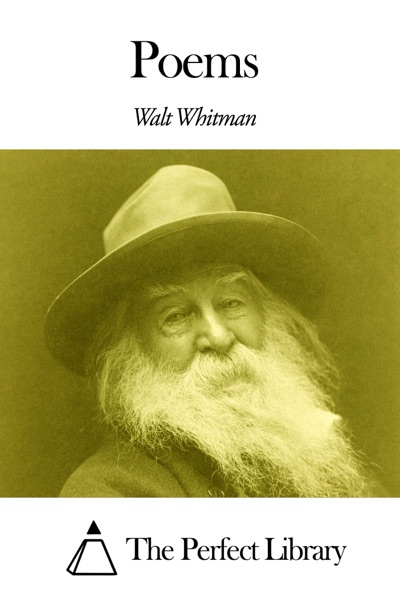
Walt Whitman's Leaves of Grass connects the human body and individual freedom to the promise of American democracy. Its poems encompass laborers, ferry passengers, lovers and wounded Civil War soldiers, alongside birds, shorelines and mourning for Abraham Lincoln. In “Song of Myself,” the speaker identifies himself with strangers; “Crossing Brooklyn Ferry” reaches across generations to address people taking the same journey.
Long free-verse lines, repeated phrases and extended catalogs can sound exuberant, intimate or insistently declamatory. The collection ranges from open celebrations of sexual desire to quiet grief and close observations of suffering, so its expansive declarations are only one part of the reading experience.
Collected’s assessment, not reader ratings. Complexity runs from 1 (least demanding) to 5 (most demanding).
Canonical
Somewhat. Long free-verse lines, repeated phrases and extended catalogs demand attention, while the emphasis on ideas and voice gives the poems philosophical complexity.
The poems range from exuberant, intimate celebrations to quiet grief and close observations of suffering. Extended declarations can sound insistently declamatory, but that voice does not dominate every poem.
Strong sexual content includes open celebrations of sexual desire. Strong violence is also present, with poems encompassing wounded Civil War soldiers and close observations of suffering.
The human body and individual freedom connect to the promise of American democracy. Laborers, lovers, strangers and the natural world bring questions of community, identity, love and work into the poems.
624 pages in the Pocket 2006 mass market paperback edition.
Pocket · 2006 · Mass Market Paperback. ISBN 9781416523710.
About 12 hours 30 minutes at 50 pages an hour, based on the 624-page Pocket edition. Dense books can take longer.
Walt Whitman was an American poet, essayist, and journalist whose work helped reshape the possibilities of modern poetry. Best known for Leaves of Grass, which he expanded and revised across much of his life, he replaced conventional rhyme and meter with an expansive free verse suited to catalogues, shifting perspectives, direct address, and a deliberately inclusive speaking voice. His writing moves between transcendental aspiration and close attention to physical reality, treating the body, sensual experience, work, nature, travel, and companionship as legitimate poetic subjects. These interests converge in his recurring effort to imagine the individual’s place within American democracy. Whitman’s characteristic scale is broad, but his public vision remains grounded in bodily presence and personal experience. He also wrote essays, journalism, and two novels, yet poetry established his lasting influence. His combination of formal freedom, democratic ambition, and a distinctly American idiom made him one of the central figures in American literature.