About 7 h 15 min · at 30 minutes a day, about 15 days
Estimated from the page count of this edition. Dense books can take longer than the estimate.
About the book
Connie Chatterley lives at Wragby Hall in the English Midlands after the First World War, her husband, Sir Clifford, having returned from the fighting paralyzed below the waist. While Clifford devotes himself to writing and his coal mines, Connie grows lonely and begins an affair with Oliver Mellors, the estate's gamekeeper. Their relationship offers the physical and emotional intimacy she lacks at Wragby, but crosses a class boundary that governs their lives.
Reader notes
Sex is explicit in this literary novel, and the narration frequently pauses for arguments about industrial society, marriage and the division between intellectual life and bodily feeling. Those discussions interrupt the love story's momentum and are a large part of the book.
How it reads
Writing style
Descriptive · Essayistic · Lyrical
Tone
Earnest · Intimate · Melancholic · Reflective
Structure
Linear
Driven by
Character · Ideas · Relationships
Point of view
Third person, omniscient
Setting
Domestic · Rural
Reading complexity
Writing
4 / 5
Ideas
4 / 5
Structure
2 / 5
Background knowledge
2 / 5
About this profile
Collected’s assessment, not reader ratings. Complexity runs from 1 (least demanding) to 5 (most demanding).
Writing
How much attention the sentences and language require.
Ideas
How much interpretation or abstract reasoning the book asks of you.
Structure
How much you need to keep track of speakers, timelines and connections.
Background knowledge
Prior knowledge needed to follow the book, beyond what it explains.
Emotional intensity
Emotional pressure, from gentle (1) to intense (5). Separate from difficulty.
Themes
Class
Isolation
Love
Marriage
Sexuality
Work
Content notes
Violence
Mild
Sexual content
Strong
Swearing
Strong
Substance use
Mild
Abuse
Mild
Self-harm or suicide
None
Standing and awards
Canonical
Le Monde's 100 Books of the Century
Everyman's Library
Penguin Classics
Widely translated and studied
Questions readers ask
Is it hard to read?
Somewhat. The descriptive, lyrical prose and frequent arguments about industrial society, marriage and bodily feeling demand attention. The story follows a linear course, so the challenge lies more in the language and ideas than in following events.
How explicit is the sex?
The content notes flag strong sexual content.
Does the love story move quickly?
The pace is measured, with frequent pauses for arguments about industrial society, marriage and the division between intellectual life and bodily feeling. Those discussions interrupt the affair’s momentum and occupy a substantial part of the novel.
What difficult content should I expect?
Strong sexual content includes explicit sex, and the language is strong too. Connie’s affair with Mellors unfolds within a story concerned with loneliness, marriage and the class boundary between them.
How long is it?
About 368 pages in the Signet Classics 2011 edition.
Which edition is shown here?
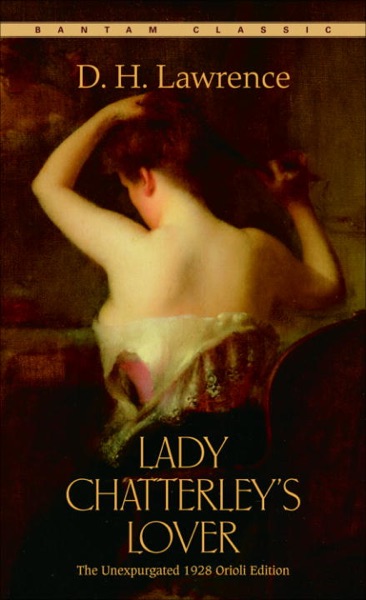
Signet Classics · 2011 · Mass Market Paperback. ISBN 9780451531957.
How long does it take to read Lady Chatterley's Lover?
About 7 hours 15 minutes at 50 pages an hour, based on the 368-page Signet Classics edition. Dense books can take longer.
About the author
D. H. Lawrence
D. H. Lawrence was an English novelist, poet, short-story writer, playwright, essayist, critic, and travel writer whose modernist work repeatedly tests intimate life against industrial society and social convention. His fiction is driven less by incident than by shifting pressures within families and couples. Dense, descriptive, often lyrical prose follows bodily responses, arguments, and changes of mood, while essayistic passages bring conflicts over class, gender, instinct, and selfhood into the open. Sons and Lovers concentrates these methods within a mining family, tracing how Paul Morel’s bond with his mother constrains his adult attachments. The Rainbow broadens the scale into a three-generation family chronicle shaped by industrial growth. Women in Love brings two couples into sustained conversation and confrontation, exposing the links among desire, power, and independence. In Lady Chatterley’s Lover, the division between mind and body is joined to the division between classes. Lawrence’s frank treatment of sexuality made several major novels objects of censorship, but it belonged to his larger concern with lives deformed by property, hierarchy, and mechanization.