Is it hard to read?
Not really, at the level of language or structure: the prose is spare and controlled, and the narrative is linear. The harder part is staying close to David’s self-justifications and resistance to understanding others.
 collected
About 4 h 30 min · at 30 minutes a day, about 9 days
Estimated from the page count of this edition. Dense books can take longer than the estimate.
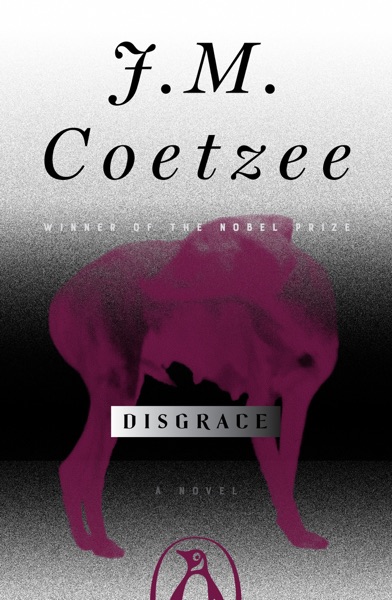
After losing his university job over an exploitative affair with a student, David Lurie leaves Cape Town for his daughter Lucy’s small farm in the Eastern Cape. He admits his guilt but refuses public repentance, and his retreat brings him into a life whose choices he struggles to understand. In post-apartheid South Africa, a violent attack exposes the distance between father and daughter, particularly over what safety, responsibility, and a future on the land might mean.
The prose is spare and controlled, the tone bleak, and the perspective stays close to David’s self-justifications. Sexual assault and brutal violence are serious subjects throughout; David is resistant to understanding others.
Collected’s assessment, not reader ratings. Complexity runs from 1 (least demanding) to 5 (most demanding).
Canonical
Not really, at the level of language or structure: the prose is spare and controlled, and the narrative is linear. The harder part is staying close to David’s self-justifications and resistance to understanding others.
Sexual assault and brutal violence are serious subjects throughout, with strong abuse and sexual content. David’s exploitative affair with a student and a violent attack are central to the story’s treatment of power, responsibility, and trauma.
The tone is bleak, intimate, and unsettling, with a measured pace and a close third-person perspective centered on David. His difficulty understanding Lucy’s choices makes the relationship between father and daughter particularly uncomfortable.
Guilt, morality, power, and race shape David’s retreat to Lucy’s farm in post-apartheid South Africa. His admission of guilt without public repentance, and their differing views of safety and responsibility, keep redemption an uneasy question.
224 pages in the Penguin Books 2000 paperback edition.
Penguin Books · 2000 · Paperback. ISBN 9780140296402.
About 4 hours 30 minutes at 50 pages an hour, based on the 224-page Penguin Books edition. Dense books can take longer.
J. M. Coetzee is a South African and Australian novelist, essayist, scholar, and translator whose career encompasses politically charged fiction, allegory, literary experiment, autobiography, and criticism. His prose is often spare and controlled, using that restraint to examine power, complicity, bodily vulnerability, and the limits of moral independence. Waiting for the Barbarians and Life & Times of Michael K place solitary figures against coercive states, while Disgrace brings similar questions of authority and responsibility into the intimate terrain of sex, family, and post-apartheid South Africa. Coetzee also repeatedly tests the ethics of storytelling itself. Foe considers who controls a narrative and whose silence it preserves; Elizabeth Costello turns lectures and public argument into fiction, exposing the distance between conviction, expression, and understanding. Across these varied forms, abstract questions remain grounded in compromised people, difficult choices, and material dependence. His broader work includes short fiction, autobiographical novels, essays, criticism, and translations from Dutch and Afrikaans.