About 12 h 30 min · at 30 minutes a day, about 26 days
Estimated from the page count of this edition. Dense books can take longer than the estimate.
About the book
Allan W. Eckert’s narrative history follows the struggle over the Ohio Valley from the years surrounding the American Revolution into the early nineteenth century. Woodsman and scout Simon Kenton’s life runs alongside that of Tecumseh, the Shawnee leader working to unite Native nations against American expansion. Scouting expeditions, raids, battles, and negotiations trace settlers’ pursuit of land and Native communities’ defense of their homelands and independence.
Reader notes
The storytelling is dramatic and detailed, using reconstructed scenes and dialogue to bring historical figures close. That approach reads much like a novel, but conversations should not be taken as transcripts. Brutal violence is a recurring part of the history.
How it reads
Writing style
Descriptive · Dialogue-driven · Journalistic
Tone
Dark · Earnest · Tense
Structure
Braided · Chronological nonfiction
Driven by
Character · Information · Plot
Setting
Ohio Valley
Evidence style
Archival history
Practical orientation
Reflective
Nonfiction form
History · Narrative nonfiction
Reading complexity
Writing
3 / 5
Ideas
3 / 5
Structure
3 / 5
Background knowledge
2 / 5
About this profile
Collected’s assessment, not reader ratings. Complexity runs from 1 (least demanding) to 5 (most demanding).
Writing
How much attention the sentences and language require.
Ideas
How much interpretation or abstract reasoning the book asks of you.
Structure
How much you need to keep track of speakers, timelines and connections.
Background knowledge
Prior knowledge needed to follow the book, beyond what it explains.
Emotional intensity
Emotional pressure, from gentle (1) to intense (5). Separate from difficulty.
The dramatic, detailed storytelling reads much like a novel, with reconstructed scenes and dialogue bringing historical figures close. It is narrative history, though, and the conversations should not be taken as transcripts.
Is it hard to read?
Somewhat. Descriptive prose and a braided narrative following Simon Kenton and Tecumseh require attention, while dialogue and dramatic scenes help carry the history. The pace varies as it moves through scouting expeditions, raids, battles, and negotiations.
How strong is the violence?
Strong, brutal violence recurs through the frontier history, including raids and battles; abuse is also strong. The struggle over land and Native independence gives the narrative a dark, tense tone.
Do I need to read the earlier books first?
No. This is the first volume in Narratives of America, so there are no earlier entries to read first. Its narrative follows the Ohio Valley struggle through the lives of Simon Kenton and Tecumseh.
How long is it?
About 626 pages in the Jesse Stuart Foundation 2001 edition. The pace varies across its detailed accounts of scouting expeditions, raids, battles, and negotiations.
Whose experiences does it follow?
Simon Kenton’s life as a woodsman and scout runs alongside Tecumseh’s efforts to unite Native nations against American expansion. Their intertwined histories trace settlers’ pursuit of land and Native communities’ defense of their homelands and independence.
Which edition is shown here?
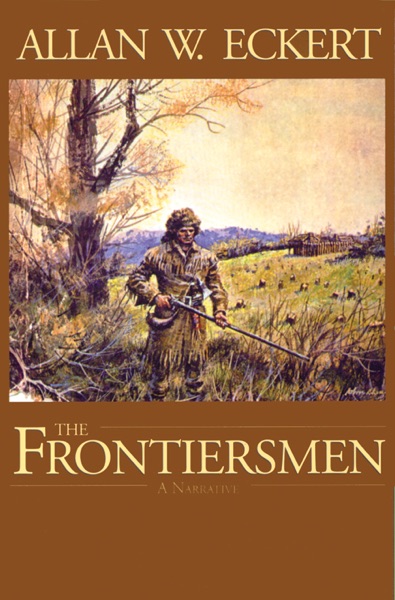
Jesse Stuart Foundation · 2001 · Paperback. ISBN 9780945084914.
How long does it take to read The Frontiersmen?
About 12 hours 30 minutes at 50 pages an hour, based on the 626-page Jesse Stuart Foundation edition. Dense books can take longer.
About the author
Allan W. Eckert
Allan W. Eckert was an American novelist, playwright, and naturalist who wrote historical narratives for adults and children as well as books of natural history. His characteristic method combined extensive research with reconstructed scenes, invented dialogue, and access to the thoughts of historical figures. The technique gives documentary material the movement of fiction, though critics questioned where interpretation overtook the historical record. In The Frontiersmen, Eckert braids the lives of Simon Kenton and Tecumseh into a ground-level account of the struggle over the Ohio Valley. Raids, negotiations, captivity, and family losses carry the history forward while keeping rival experiences of westward expansion in view. Incident at Hawk’s Hill brings the same close observation to animal behavior, building its wilderness plot around a largely mute child sheltered by a badger while his family continues searching for him. The HAB Theory extends Eckert’s direct, descriptive storytelling into speculative catastrophe, using scientific argument, political urgency, and preparations for survival to propel its apocalyptic premise.