Writing style
Descriptive · Direct · Journalistic
 Apple Books
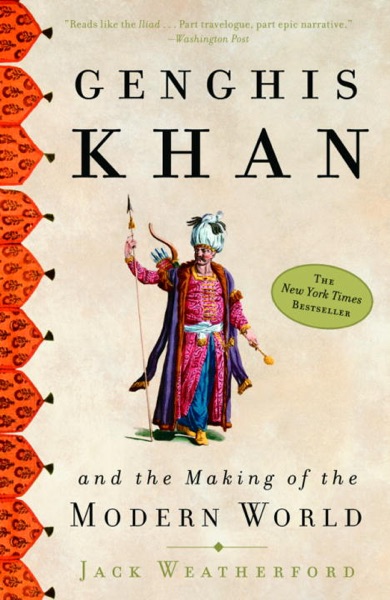
Jack Weatherford traces Genghis Khan’s rise on the Mongolian steppes, the military innovations that enabled a relatively small army to conquer across Asia and Europe, and the vast Eurasian empire developed by his successors. Rather than treating the Mongols solely as agents of destruction, he examines the systems that sustained their rule: taxation, administration, education, religious tolerance, and long-distance exchange. Trade routes moved scientific knowledge, agricultural practices, and technologies between societies that had previously remained far apart. Drawing heavily on non-Western historical sources, Weatherford challenges inherited Western images of Mongol barbarism while retaining conquest as part of the story. The book presents empire as both violent expansion and an engine of cultural connection, asking how Mongol rule helped reshape the wider world.
Collected’s assessment, not reader ratings. Complexity runs from 1 (least demanding) to 5 (most demanding).
Descriptive · Direct · Journalistic
Moderate
Cerebral · Earnest · Reflective
Argumentative · Chronological nonfiction
Character · Ideas · Information
3 / 5
For the print edition listed above.
Apple Books is a service mark of Apple Inc. iPhone is a trademark of Apple Inc., registered in the U.S. and other countries.