About 5 h 45 min · at 30 minutes a day, about 12 days
Estimated from the page count of this edition. Dense books can take longer than the estimate.
About the book
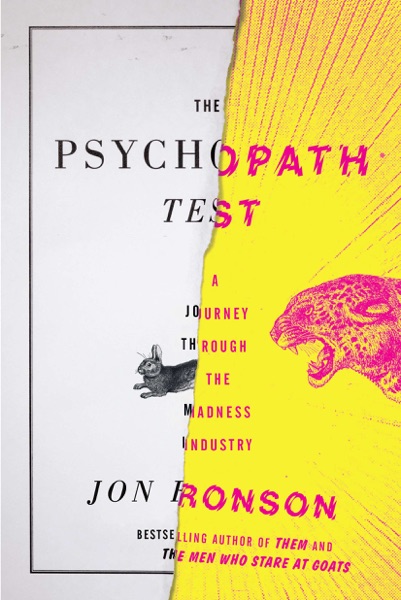
Jon Ronson investigates how psychopathy is identified and what happens when a psychiatric label becomes the explanation for someone’s behavior. After training with psychologist Robert Hare, he takes Hare’s checklist beyond the consulting room, interviewing executive Al Dunlap, a former Haitian death-squad leader imprisoned in New York, and a Broadmoor patient who says he faked mental illness to avoid jail. A mysterious book mailed to academics provides another thread in his inquiry into who gets to define sanity.
Reader notes
Funny, uneasy and digressive, the first-person reporting follows Ronson’s encounters and his own susceptibility to persuasive explanations. It reads as an investigation full of personalities and detours, so anyone seeking a systematic introduction to psychopathy will get a less orderly tour.
How it reads
Writing style
Conversational · Direct
Tone
Humorous · Irreverent · Unsettling
Structure
Episodic
Driven by
Ideas · Information · Voice
Point of view
First person
Setting
Hospital medical · Institutional
Evidence style
Case studies · Journalistic reporting · Personal experience
Collected’s assessment, not reader ratings. Complexity runs from 1 (least demanding) to 5 (most demanding).
Writing
How much attention the sentences and language require.
Ideas
How much interpretation or abstract reasoning the book asks of you.
Structure
How much you need to keep track of speakers, timelines and connections.
Background knowledge
Prior knowledge needed to follow the book, beyond what it explains.
Emotional intensity
Emotional pressure, from gentle (1) to intense (5). Separate from difficulty.
Themes
Identity
Justice
Knowledge and truth
Mental health
Power
Content notes
Violence
Mild
Sexual content
Mild
Swearing
Mild
Substance use
Mild
Abuse
Mild
Self-harm or suicide
Mild
Questions readers ask
Is it hard to read?
No, the conversational, direct prose and brisk pace make it approachable without prior knowledge of psychology. The episodic reporting takes detours, so following the inquiry means moving between personalities and ideas rather than through a tidy sequence of explanations.
Is it a systematic introduction to psychopathy?
No, Ronson follows interviews, case studies and his own experiences rather than giving a systematic introduction. Hare’s checklist connects encounters with an executive, an imprisoned former death-squad leader and a Broadmoor patient who says he faked mental illness.
What does the humor feel like?
The humor is irreverent and uneasy, carried by Ronson’s first-person encounters and his own susceptibility to persuasive explanations. The reporting stays unsettling as it asks how psychiatric labels become explanations for people’s behavior.
Does it offer practical advice?
Not really, the emphasis is reflective investigation rather than practical guidance. Ronson explores how psychopathy is identified, who gets to define sanity and what power psychiatric labels carry when applied beyond the consulting room.
How long is it?
About 288 pages in the Riverhead Books 2012 edition. The brisk pace and episodic encounters keep the investigation moving, though Ronson takes frequent detours.
Which edition is shown here?
Riverhead Books · 2012 · paperback. ISBN 9781594485756.
How long does it take to read The Psychopath Test?
About 5 hours 45 minutes at 50 pages an hour, based on the 288-page Riverhead Books edition. Dense books can take longer.
About the author
Jon Ronson
Jon Ronson is a British-American journalist, author, and filmmaker whose narrative nonfiction examines unsettling ideas by spending time with the people and institutions that sustain them. He often enters his reporting as a questioning, faintly bewildered presence, using interviews, personal encounters, and dry comedy to draw subjects out while maintaining a skeptical distance. His range extends from conspiracy-minded political and religious groups in Them to the military’s experiments with paranormal warfare in The Men Who Stare at Goats. The Psychopath Test turns a suspected hoax into a broader inquiry into psychiatric diagnosis and the authority surrounding it, while So You’ve Been Publicly Shamed follows the workings and consequences of online punishment. Across these books and the varied investigations collected in Lost at Sea, Ronson is drawn to closed communities, powerful systems, and convictions that can appear absurd until they acquire institutional or collective force. His distinctive method combines access and curiosity with an alertness to embarrassment, self-deception, and the damage done by certainty.