About 5 h 45 min · at 30 minutes a day, about 12 days
Estimated from the page count of this edition. Dense books can take longer than the estimate.
About the book
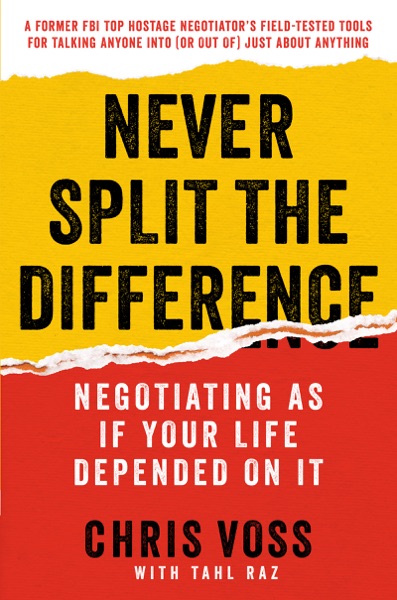
Chris Voss draws on his experience as an FBI hostage negotiator to explain bargaining at work and at home, from salary discussions to major purchases. Writing with Tahl Raz, he argues that understanding emotions and keeping the other person talking can uncover information and improve an agreement. His techniques include repeating key words, naming apparent feelings, and asking open-ended questions instead of rushing toward compromise.
Reader notes
The business guide is conversational and assertive, moving between tense hostage accounts, everyday examples, and specific wording to practice. It teaches through stories and practical instructions, with kidnapping and threats of violence recurring in the cases.
How it reads
Writing style
Conversational · Direct
Tone
Earnest
Structure
Episodic
Driven by
Ideas · Information
Point of view
First person
Evidence style
Case studies · Personal experience
Practical orientation
Actionable
Nonfiction form
Explanation synthesis · Prescriptive how to
Reading complexity
Writing
2 / 5
Ideas
3 / 5
Structure
2 / 5
Background knowledge
1 / 5
About this profile
Collected’s assessment, not reader ratings. Complexity runs from 1 (least demanding) to 5 (most demanding).
Writing
How much attention the sentences and language require.
Ideas
How much interpretation or abstract reasoning the book asks of you.
Structure
How much you need to keep track of speakers, timelines and connections.
Background knowledge
Prior knowledge needed to follow the book, beyond what it explains.
Emotional intensity
Emotional pressure, from gentle (1) to intense (5). Separate from difficulty.
Themes
Power
Work
Content notes
Violence
Strong
Sexual content
None
Swearing
Mild
Substance use
None
Abuse
Mild
Self-harm or suicide
Mild
Questions readers ask
Is it useful outside business negotiations?
Yes, the advice covers bargaining at home as well as at work, including salary discussions and major purchases. Voss focuses on understanding emotions and keeping the other person talking to uncover information before reaching an agreement.
Does it give concrete techniques to practice?
Yes, it offers specific wording to practice, including repeating key words, naming apparent feelings, and asking open-ended questions. Stories and everyday examples explain how those techniques can keep a conversation going instead of rushing toward compromise.
Is it hard to read?
No, the prose is conversational and direct, with a brisk pace and little prerequisite knowledge needed. It moves between hostage accounts, everyday examples, and practical instructions rather than staying with abstract explanation.
What does it use to support its advice?
Voss draws on personal experience as an FBI hostage negotiator and case studies. The explanations move between tense hostage accounts and everyday bargaining situations, using stories to teach practical techniques.
How strong is the violence?
Strong violence is part of the hostage cases, with kidnapping and threats of violence recurring. These tense accounts sit alongside everyday examples and practical negotiation instructions.
How long is it?
About 288 pages in the HarperBusiness 2016 edition. The brisk pace and movement between stories, everyday examples, and practical instructions help carry the explanations.
Which edition is shown here?
HarperBusiness · 2016 · hardcover. ISBN 9780062407801.
How long does it take to read Never Split the Difference?
About 5 hours 45 minutes at 50 pages an hour, based on the 288-page HarperBusiness edition. Dense books can take longer.
About the authors
Chris Voss
Christopher Voss is a former FBI hostage negotiator, CEO of The Black Swan Group, and teacher of negotiation at Harvard Law School, Georgetown University, and the University of Southern California. His writing draws on that combination of field experience and instruction, emphasizing close attention to language, emotion, and behavior when cooperation is uncertain. In Never Split the Difference, co-written with journalist Tahl Raz, he uses cases involving kidnappings and a bank robbery to develop methods for difficult conversations, then shows how those methods apply to work, purchases, housing, parenting, and relationships.
Tahl Raz
Tahl Raz is a business journalist and collaborative nonfiction writer who turns specialist experience, interviews, and large datasets into practical systems. His books typically move between cases and named principles, using personal narrative to make formulas memorable. In Never Split the Difference, written with former FBI negotiator Chris Voss, hostage cases lead into nine principles for ordinary negotiations. Never Eat Alone, with Keith Ferrazzi, reframes networking as sustained generosity and reciprocal contact. The CEO Next Door shows Raz’s empirical range, distilling interviews and a large leadership dataset into four behaviors. His recurring subject is how apparently intuitive business skills can be observed, explained, and practiced.