About 13 h 45 min · at 30 minutes a day, about 28 days
Estimated from the page count of this edition. Dense books can take longer than the estimate.
About the book
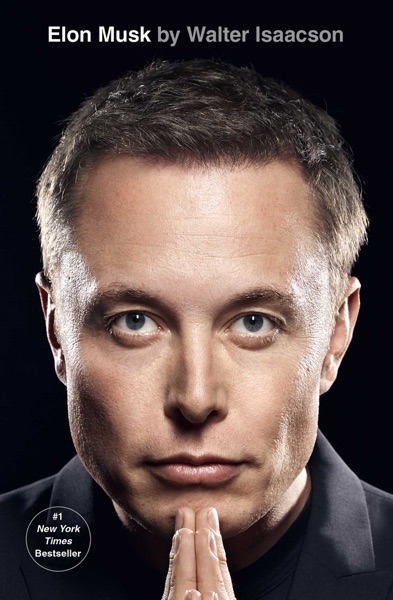
Walter Isaacson’s biography traces Elon Musk’s life from a childhood marked by bullying and a damaging relationship with his father in South Africa to his work at Tesla and SpaceX, involvement in artificial intelligence, and purchase of Twitter. It examines how his appetite for risk and confrontation drives ambitious projects while disrupting his companies and relationships. Isaacson draws on two years spent shadowing Musk in meetings and factories, alongside interviews with family, colleagues, and adversaries.
Reader notes
Brisk and anecdotal, the narrative follows production emergencies, launches, and personal conflicts in considerable detail. Its recurring question is whether Musk’s achievements require the behavior that hurts people around him; childhood emotional abuse is part of that inquiry.
How it reads
Writing style
Descriptive · Direct · Journalistic
Tone
Cerebral · Detached · Reflective · Tense
Structure
Chronological nonfiction
Driven by
Character · Ideas · Information
Setting
South Africa
Evidence style
Journalistic reporting · Research synthesis
Practical orientation
Reflective
Nonfiction form
Biography · Narrative nonfiction
Reading complexity
Writing
3 / 5
Ideas
3 / 5
Structure
3 / 5
Background knowledge
2 / 5
About this profile
Collected’s assessment, not reader ratings. Complexity runs from 1 (least demanding) to 5 (most demanding).
Writing
How much attention the sentences and language require.
Ideas
How much interpretation or abstract reasoning the book asks of you.
Structure
How much you need to keep track of speakers, timelines and connections.
Background knowledge
Prior knowledge needed to follow the book, beyond what it explains.
Emotional intensity
Emotional pressure, from gentle (1) to intense (5). Separate from difficulty.
Themes
Ambition
Legacy
Morality
Power
Technology and society
Work
Content notes
Violence
Mild
Sexual content
Mild
Swearing
Strong
Substance use
Mild
Abuse
Mild
Self-harm or suicide
Mild
Questions readers ask
Is it hard to read?
Not really. The prose is direct and journalistic, and the chronological narrative moves briskly through anecdotes. Production emergencies, launches, and personal conflicts receive considerable detail, so there is plenty to absorb.
Is it a practical guide to running a business?
No. Isaacson takes a reflective biographical approach, following Musk’s decisions, workplace conflicts, and appetite for risk. The emphasis is on understanding his character and the consequences of his behavior rather than providing business instructions.
How does Isaacson examine Musk’s behavior?
A recurring question is whether Musk’s achievements require the behavior that hurts people around him. Isaacson connects ambition, risk, and confrontation with disruptions to Musk’s companies and relationships, drawing on two years of shadowing and interviews with family, colleagues, and adversaries.
What difficult content should I expect?
Strong language accompanies accounts of personal and workplace conflict. Childhood emotional abuse, bullying, and Musk’s damaging relationship with his father form part of the inquiry into his behavior; abuse is mild in depiction but important to that inquiry.
Who is it best suited to?
It suits someone interested in the person behind Tesla, SpaceX, artificial intelligence ventures, and the purchase of Twitter. The narrative gives considerable attention to factory meetings, production crises, and personal relationships, combining technology and business history with a study of character.
How long is it?
688 pages in the Simon & Schuster 2023 hardcover edition.
Which edition is shown here?
Simon & Schuster · 2023 · Hardcover. ISBN 9781982181284.
How long does it take to read Elon Musk?
About 13 hours 45 minutes at 50 pages an hour, based on the 688-page Simon & Schuster edition. Dense books can take longer.
About the author
Walter Isaacson
Walter Isaacson is a journalist and biographer whose subjects range from statesmen and scientists to artists and technology entrepreneurs. His books combine direct, descriptive reporting with archival research, interviews, and close attention to the institutions in which ideas become practical work. He is especially interested in creativity as a process: the habits, rivalries, collaborations, and personal demands behind public achievement. In Steve Jobs and Elon Musk, extensive access allows him to place product development, factory crises, and corporate culture beside volatile behavior, without separating accomplishment from its costs. Einstein and Leonardo da Vinci organize difficult bodies of knowledge around individual curiosity, using historical context, primary documents, and notebooks to connect intellectual breakthroughs with daily practice. The Innovators broadens this method into a collective history of computing, following ideas as they pass among theorists, engineers, entrepreneurs, and teams. Isaacson’s prose is explanatory and chronological, keeping technical detail subordinate to character and sequence while repeatedly shifting the focus from solitary genius to the networks that sustain invention.